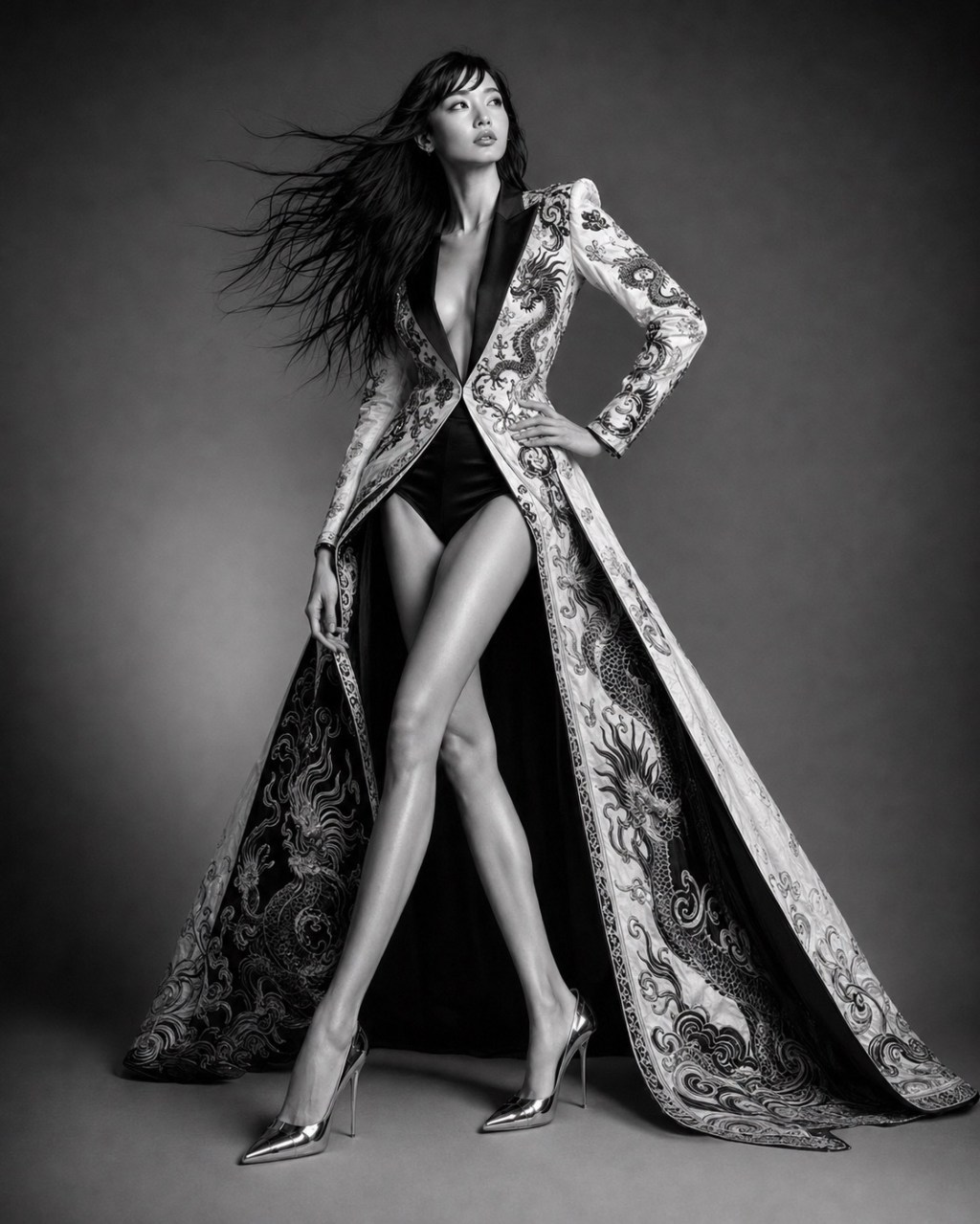
Fashion is not just clothing; it is the changing agreement around what clothing means. A shirt, shoe, bag, silhouette, colour or logo becomes fashionable when culture is ready to read it differently, and that reading changes with time.
This mega article stack explains the full machine: how taste is trained, how trends move from the edge to the centre, how hype gives people permission to wear the future, how peacocking pushes difference into excess, how the centre returns when everything becomes too loud, and how fashion resets again when old signals lose power and new meanings are needed.
Fashion works because people are always balancing belonging and difference, safety and risk, restraint and display, memory and novelty. Clothing is the object, fashion is the agreement, and time is the engine.
Summary
Fashion is not just clothing. Clothing covers the body. Fashion explains the body to the world.
A shirt is fabric. A dress is fabric. A pair of shoes is material, construction, colour and shape. But fashion begins when society starts reading those things as signals.
Is it stylish?
Is it old-fashioned?
Is it expensive?
Is it cheap?
Is it rebellious?
Is it respectable?
Is it young?
Is it mature?
Is it local?
Is it global?
Is it tasteful?
Is it too much?
Is it too early?
Is it already over?
That is where fashion lives.
Fashion is culture meeting time. Culture gives clothing its meaning. Time changes that meaning. A look that once seemed strange can become desirable. A look that once seemed desirable can become ordinary. A look that once seemed ordinary can become fashionable again after society grows tired of the new.
Fashion works because human beings are always reading one another. We do not only wear clothes. We wear timing, identity, status, mood, aspiration, belonging and difference.
This is why fashion never stays still.
1. Clothing Is Material. Fashion Is Meaning.
The first mistake is to think fashion is only about clothes.
It is not.
Clothes are physical objects. They are made from cotton, wool, silk, leather, denim, polyester, nylon, linen, rubber, metal, plastic, thread and dye. Clothes can be measured, washed, folded, stored, sold and repaired.
Fashion is different.
Fashion is the meaning attached to those clothes at a particular moment in culture.
A white shirt can be school uniform, office wear, waiter uniform, wedding attire, minimalist luxury, old money style, political costume, religious modesty, or ironic streetwear depending on where, when, how and by whom it is worn.
The shirt did not change.
The meaning changed.
That is how fashion works.
Fashion begins when clothing becomes readable.
2. Fashion Is a Social Language
Every society develops visual codes.
Some codes are obvious. A police uniform tells us one thing. A wedding dress tells us another. A school uniform, football jersey, business suit, military jacket, religious garment, graduation robe or luxury handbag all carry meanings that society understands.
But fashion becomes more interesting when the code is less obvious.
A slightly oversized T-shirt.
A particular trouser cut.
A certain sneaker shape.
A colour palette.
A haircut.
A bag carried in a particular way.
A logo shown loudly.
A logo hidden quietly.
A vintage jacket.
A watch that only certain people recognise.
A dress that references another decade.
These are not just personal choices. They are social messages.
Some people know how to read them. Some do not. That gap creates status.
Fashion is therefore a language with different levels of fluency.
Some people only see clothes.
Some people see brands.
Some people see price.
Some people see trend.
Some people see history.
Some people see class.
Some people see subculture.
Some people see timing.
The more fluent the eye, the more meaning it can read.
3. Time Changes Taste
Taste does not stay still because time does not stay still.
A look may begin as shocking. Then it becomes interesting. Then fashionable. Then mainstream. Then boring. Then embarrassing. Then nostalgic. Then vintage. Then desirable again.
This is why fashion often feels irrational.
One generation rejects what the previous generation wore.
Then the next generation rediscovers it.
Then the market repackages it.
Then the old style returns with a new meaning.
The object may be similar, but the cultural timing is different.
Wide trousers can look old-fashioned in one decade, fresh in another, sloppy in another, luxurious in another. Skinny jeans can look sharp, then normal, then dated, then possibly return later as a reaction against looseness.
Fashion is rarely a straight line of improvement.
It is a loop of meaning.
Old becomes new when enough time has passed for society to see it differently.
4. Culture Gives Clothes Their Emotional Charge
Clothes do not carry meaning by themselves. Culture charges them with meaning.
A hoodie can mean comfort, youth, streetwear, danger, tech wealth, school life, laziness, rebellion or luxury depending on the cultural moment.
A suit can mean professionalism, power, conformity, old money, politics, banking, funeral wear, wedding wear, irony or dated masculinity.
Sneakers can mean sport, hip-hop, youth culture, resale value, comfort, status, collectability, office casual or luxury fashion.
A plain T-shirt can mean basic clothing, working-class practicality, minimalist taste, muscular masculinity, American casualwear, underdressing, luxury simplicity or anti-fashion.
The same item can move between meanings because society keeps rewriting it.
That is why fashion is not only about design.
It is about interpretation.
5. Fashion Balances Belonging and Difference
Fashion has one of the strangest tensions in human life.
People want to belong.
People also want to stand out.
If nobody else wears the look, it may feel too strange.
If everyone wears the look, it loses its power.
This is the engine.
Fashion needs imitation because a style must spread before it becomes fashion. But fashion also needs difference because the style must feel special enough to be worth copying.
That is why people often dress to join one group while separating from another.
A teenager may dress to belong to a youth culture while separating from parents.
A professional may dress to belong to a corporate class while separating from students.
A luxury buyer may dress to belong to wealth while separating from mass consumption.
A streetwear fan may dress to belong to a subculture while separating from formal society.
A minimalist may dress to belong to taste while separating from loud fashion.
Fashion is never only about “I like this.”
It is also about:
Who do I want to be near?
Who do I want to be different from?
Who do I want to recognise me?
Who do I not care about impressing?
Who am I trying not to look like?
Clothes answer these questions before we speak.
6. The Edge Moves First
Fashion usually begins at the edge.
The edge may be artists, musicians, designers, youth cultures, street communities, nightlife, luxury insiders, online creators, students, rebels, outsiders, stylists, athletes, celebrities or people with unusual confidence.
The edge tries things before the centre is ready.
At first, the look may appear strange. Too loud. Too loose. Too tight. Too feminine. Too masculine. Too childish. Too old. Too poor. Too rich. Too foreign. Too local. Too ugly. Too plain. Too much.
But the edge has an important job.
It tests the future.
The centre usually does not move first because the centre has more to lose. The centre wants safety, respectability and proof. It does not want to look foolish too early.
So the edge takes the risk.
Then the centre watches.
7. The Centre Accepts Slowly
Most people do not adopt fashion immediately.
They wait.
They need to see the look repeated. They need social proof. They need someone else to make the first mistake. They need the look to appear in the right places, on the right people, with the right explanation.
The first sighting feels strange.
The second sighting feels familiar.
The third sighting feels like something is happening.
The fourth sighting feels like a trend.
The fifth sighting feels safe enough to try.
This is how fashion moves from the edge to the centre.
A risky look becomes visible.
Visibility becomes familiarity.
Familiarity becomes permission.
Permission becomes adoption.
Adoption becomes normality.
By the time the centre accepts the look, the edge may already be preparing to leave.
8. Fashion Is Agreement
Fashion is not one designer deciding.
A designer can propose.
A celebrity can amplify.
A brand can produce.
A magazine can explain.
An influencer can repeat.
A boutique can display.
A platform can push.
A crowd can imitate.
But fashion only becomes fashion when enough people agree that the look now makes sense.
This agreement may be conscious or unconscious. Nobody needs to hold a meeting. Nobody needs to vote. Society simply begins to behave as if the look is acceptable, desirable or normal.
That is the quiet power of fashion.
Fashion is a distributed agreement.
It happens across streets, schools, offices, malls, clubs, weddings, gyms, airports, feeds, runways, shops, families and friend groups.
The agreement is not equal everywhere. A look may be fashionable in one city and odd in another. It may be normal among teenagers and embarrassing to parents. It may be desirable in one class group and rejected in another. It may be mainstream online but still strange offline.
Fashion does not move evenly.
It moves through culture in patches.
9. Hype Gives Permission
Hype is often misunderstood.
People think hype is only excitement. It is more than that.
Hype is social permission.
A new look can feel dangerous when it first appears. Most people are not afraid of the clothes themselves. They are afraid of being read wrongly.
They worry:
Will I look stupid?
Will I look like I am trying too hard?
Will people understand it?
Is it too early?
Is it already over?
Can someone like me wear this?
Is this stylish or ridiculous?
Hype answers these fears.
When the look appears repeatedly on admired people, desirable bodies, fashionable streets, respected stores, viral videos, luxury campaigns and influential accounts, people begin to relax.
The look has been socially tested.
Now the centre can move.
This is why fashion marketing is not only about showing products. It is about creating permission.
10. The Market Translates the Edge
The first version of a fashion idea is often too extreme for the centre.
So the market translates it.
The runway version becomes a retail version.
The subculture version becomes a mall version.
The luxury version becomes a fast-fashion version.
The celebrity version becomes a practical version.
The strange version becomes a safer version.
This translation is important.
The centre often does not want the original edge. It wants a manageable version of the edge.
A person may not wear the full runway silhouette, but they may accept a softened version. They may not wear the extreme streetwear look, but they may buy the sneaker. They may not adopt the whole subculture, but they may borrow the jacket.
Fashion spreads through partial adoption.
The centre does not copy everything. It selects what it can absorb.
11. Fashion Dies When the Signal Becomes Too Common
A fashion signal loses power when too many people understand it.
This is the tragedy of every trend.
At first, the look says:
I know something.
Then it says:
I am part of something.
Then it says:
Everyone is doing this.
Then it says:
This is over.
The same item can move from exciting to embarrassing without changing physically.
What changed is the signal.
Fashion depends on scarcity, timing and interpretation. Once the look becomes too available, too repeated, too obvious or too late, it loses its charge.
Then the edge moves again.
12. Why Some Things Become Classic
Not everything disappears quickly.
Some clothes become classic because they solve long-term cultural problems.
A white shirt.
A navy blazer.
A black dress.
A clean sneaker.
A good pair of jeans.
A trench coat.
A leather shoe.
A simple watch.
A plain T-shirt.
A well-cut trouser.
These items survive because they are flexible. They can be reinterpreted across time. They do not depend entirely on novelty.
But even classics change.
The cut changes. The styling changes. The fabric changes. The body wearing it changes. The attitude changes. The social meaning changes.
A classic is not frozen.
A classic is an object that can keep surviving new interpretations.
13. Fashion Is Also About Power
Fashion is not innocent.
The people who define taste often have power.
They may have money, media access, cultural authority, beauty, celebrity, social confidence, education, institutional position or algorithmic reach.
This is why the same look can be judged differently on different bodies.
A rich person wearing old clothes may be seen as relaxed.
A poor person wearing old clothes may be judged as unsuccessful.
A celebrity wearing something strange may be called visionary.
An ordinary person wearing the same thing may be mocked.
A luxury brand selling simplicity may be praised as refined.
A cheap version of simplicity may be ignored.
Fashion is not only the look.
It is the look plus the wearer plus the context.
This is why taste is often political, even when it pretends to be natural.
14. Fashion Has Memory
Every fashion item carries memory.
It remembers who wore it before. It remembers where it came from. It remembers which class used it, which subculture used it, which decade used it, which celebrity revived it, which brand commercialised it, and which group abandoned it.
This memory gives fashion depth.
A bomber jacket is not just a jacket.
Denim is not just fabric.
A pearl necklace is not just jewellery.
A sneaker is not just footwear.
A black suit is not just tailoring.
A floral dress is not just decoration.
Each item carries histories of work, gender, rebellion, luxury, military, sport, religion, youth, modesty, sexuality, class and nation.
Fashion is culture stored in objects.
When we wear clothes, we also wear traces of the past.
15. The Internet Speeds Up the Cycle
Modern fashion moves faster because visibility moves faster.
In the past, trends travelled through runways, magazines, shops, celebrities, films, music scenes, street cultures and word of mouth. These systems still matter, but now they are compressed by social media.
A look can appear, spread, peak and become tired very quickly.
The internet makes fashion more democratic because more people can participate. It also makes fashion more unstable because every look can be copied, named, exaggerated, mocked and replaced at high speed.
The algorithm does not only show fashion.
It accelerates fashion.
This creates microtrends, aesthetic tribes, viral items and visual fatigue. People see too much, too quickly. A style can feel old before many people have even worn it.
The centre no longer waits years to absorb the edge.
The feed drags the edge into the centre.
16. Fashion Fatigue and the Return of Restraint
When fashion moves too fast, people get tired.
Too many trends.
Too many aesthetics.
Too many drops.
Too many logos.
Too many hauls.
Too many “cores.”
Too many outfits made for photographs.
Too many people trying to look unique in the same way.
When the visual field becomes too noisy, restraint becomes desirable.
A plain outfit starts to look intelligent.
A quiet colour starts to look expensive.
A normal silhouette starts to look confident.
A lack of logos starts to look powerful.
A simple wardrobe starts to look mature.
This is one of fashion’s great reversals.
Sometimes the future is not louder.
Sometimes the future is calmer.
17. Fashion Is a Clock
Fashion is a clock, but not a simple one.
It does not only tell the time of day. It tells cultural time.
It tells us whether society wants optimism or seriousness.
Whether people want rebellion or safety.
Whether people want luxury or practicality.
Whether people want nostalgia or futurism.
Whether people want individuality or belonging.
Whether people want loud display or quiet control.
Clothes become a way of seeing what a culture is feeling.
When people dress loudly, society may be seeking visibility.
When people dress minimally, society may be seeking control.
When people dress nostalgically, society may be seeking memory.
When people dress casually, society may be rejecting formality.
When people dress formally again, society may be craving structure.
Fashion is not shallow.
It is a surface that reveals depth.
18. The Big Machine
So how does fashion work?
It begins with material.
Then culture gives the material meaning.
Then time changes the meaning.
Then people read the meaning.
Then groups copy, reject, modify and exaggerate the meaning.
Then the market translates it.
Then hype gives permission.
Then the centre accepts it.
Then the signal weakens.
Then the edge moves again.
This is the fashion machine.
It is not random. It only looks random because many forces are moving at once.
Fashion is built from desire, status, memory, timing, fear, imitation, rebellion, boredom, money, media, beauty, practicality, fantasy and social agreement.
That is why the same pair of shoes can be nothing one year, everything the next, and embarrassing the year after.
19. Why Fashion Matters
Fashion matters because it teaches us how humans create meaning.
We are not only practical creatures. We are symbolic creatures. We do not simply ask, “Does this cover me?” We ask, “What does this say about me?”
Fashion shows us how quickly meaning can change.
It shows us how culture absorbs rebellion.
It shows us how status hides inside taste.
It shows us how the centre follows the edge.
It shows us how the edge escapes the centre.
It shows us how people perform identity.
It shows us how markets sell belonging.
It shows us how time turns embarrassment into nostalgia.
It shows us how ordinary things can become desirable again.
Fashion is not just about looking good.
It is about being understood at the right time.
20. The Core Idea
Fashion is culture meeting time.
Culture decides what clothes mean.
Time changes what culture sees.
People wear the result.
That is why fashion never stands still.
A look becomes fashionable when the world is ready to read it differently.
The edge may discover it first.
The centre may accept it later.
The market may sell it widely.
The crowd may exhaust it.
The next generation may revive it.
But the deeper rule remains the same:
Clothing is the object.
Fashion is the agreement.
Time is the engine.
And every generation thinks it is choosing freely, while standing inside a moving river of culture, memory, status and desire.
That is how fashion works.
How Taste Works | The Eye Is Trained
Summary
Taste feels personal.
We say, “I like this.”
We say, “That is ugly.”
We say, “This looks expensive.”
We say, “That looks cheap.”
We say, “This is stylish.”
We say, “That is too much.”
We say, “This is classy.”
We say, “That is trying too hard.”
But taste is not born fully formed inside us.
Taste is trained.
It is trained by family, class, school, media, religion, city, climate, music, celebrity, social media, friends, money, aspiration, shame, confidence, memory and exposure.
The eye learns before the mouth explains.
By the time we say, “I just like it,” culture may already have installed the preference.
This is how taste works.
1. Taste Feels Natural, But It Is Learned
Most people think taste is private.
They think they simply choose what they like. But if taste were purely private, fashion would not move in groups. Trends would not exist. Certain colours, silhouettes, brands, hairstyles, shoes and accessories would not suddenly become desirable at the same time.
Taste has patterns because taste is social.
A person does not grow up in a blank room. They grow up surrounded by examples of what is considered proper, attractive, respectable, stylish, cheap, loud, vulgar, modest, modern, outdated, rich, poor, masculine, feminine, youthful, serious, local or foreign.
A child learns taste before learning theory.
They learn by watching.
What does the mother wear to a wedding?
What does the father wear to work?
What do rich people wear in dramas?
What do stylish people wear in magazines?
What do teachers call inappropriate?
What do friends laugh at?
What do older siblings desire?
What do celebrities repeat?
What does the mall display?
What does the school forbid?
What does the internet reward?
The eye collects these lessons quietly.
Later, the person calls it taste.
2. Taste Is the Memory of Repeated Signals
If we see a look once, it may feel strange.
If we see it many times on admired people, in desirable settings, with good lighting, good bodies, good photography and good social approval, the look begins to soften.
The eye gets trained by repetition.
At first:
“That looks weird.”
Then:
“I keep seeing this.”
Then:
“Maybe it works.”
Then:
“I kind of like it.”
Then:
“I need one.”
Taste often begins as resistance.
This is why fashion marketing works. It does not need to force immediate agreement. It only needs to keep placing the image in front of the eye until the unfamiliar becomes familiar.
Familiarity is one of the great engines of taste.
The strange becomes readable.
The readable becomes acceptable.
The acceptable becomes desirable.
The desirable becomes obvious.
By the end, people forget that they had to learn it.
3. The Eye Is Trained by Power
Taste is not equal.
Some people, groups and institutions have more power to define what counts as good taste.
Luxury brands have power.
Fashion magazines have power.
Celebrities have power.
Wealthy people have power.
Stylists have power.
Design schools have power.
Film and music have power.
Major cities have power.
Algorithms have power.
Old-money circles have power.
Youth cultures have power.
Subcultures have power.
Beauty standards have power.
When powerful groups repeat a visual code, society often begins to read that code as tasteful.
This does not mean the code is naturally superior.
It means the code has authority behind it.
A plain beige coat on a wealthy person may be called understated.
A plain beige coat on a poor person may be called boring.
An oversized silhouette on a runway may be called architectural.
The same silhouette in the wrong setting may be called sloppy.
A messy haircut on a musician may be called cool.
The same haircut on an office worker may be called unprofessional.
Taste is not only the object.
Taste is the object plus the person plus the setting plus the social permission around it.
4. Good Taste Often Means Knowing the Code
Many people think good taste means beauty.
Sometimes it does.
But often, good taste means knowing the correct code for the correct context.
A person with taste understands proportion, timing, setting and restraint. They know when to blend and when to stand out. They know when an outfit is too early, too late, too loud, too plain, too formal, too casual, too young, too old, too cheap-looking, too over-designed or too desperate.
Taste is therefore a kind of social intelligence.
It reads the room.
Good taste asks:
Where am I?
Who is watching?
What is the occasion?
What is expected?
How much can I bend the rule?
How much can I break the rule?
What does this signal here, not just in my head?
Fashion mistakes often happen when a person wears the right item in the wrong cultural sentence.
The item may be good.
The timing may be wrong.
The context may be wrong.
The combination may be wrong.
The body language may be wrong.
The social reading may be wrong.
Taste is not only choosing good pieces.
Taste is placing them correctly.
5. Taste Is Also About What We Reject
Taste is not only attraction.
Taste is rejection.
When someone says, “I would never wear that,” they are often protecting an identity.
They may be rejecting a class group.
They may be rejecting an age group.
They may be rejecting a gender code.
They may be rejecting a past version of themselves.
They may be rejecting a trend they think is beneath them.
They may be rejecting people they do not want to resemble.
They may be rejecting a kind of attention they do not want.
This is why fashion arguments become emotional.
People are not only discussing fabric.
They are defending boundaries.
A person who hates loud logos may not only dislike design. They may dislike obvious status display. A person who hates plain minimalism may not only dislike simplicity. They may dislike emotional coldness, elitism or boredom. A person who hates vintage may not only dislike old clothes. They may dislike looking poor, outdated or unserious. A person who hates luxury may not only dislike price. They may dislike hierarchy.
Taste is a map of desire and refusal.
It shows what we want to approach and what we want to escape.
6. Taste Is Class Training
One of the most powerful forces in taste is class.
Different class groups often learn different ideas of what looks good, what looks respectable, what looks expensive, what looks excessive, what looks safe and what looks embarrassing.
Some groups value polish.
Some value practicality.
Some value restraint.
Some value visible luxury.
Some value comfort.
Some value modesty.
Some value tradition.
Some value trend awareness.
Some value individuality.
Some value durability.
Some value brand recognition.
Some value not looking like they care.
This creates different taste worlds.
In one world, a big logo is proof of success.
In another world, a big logo is vulgar.
In one world, formal dressing is respect.
In another, it is stiffness.
In one world, casual dressing is freedom.
In another, it is laziness.
In one world, newness matters.
In another, heritage matters.
Fashion becomes complicated because people from different taste worlds judge each other using different rules.
Nobody is simply seeing clothes.
Everyone is seeing clothes through training.
7. The Rich Can Make Plain Things Look Rich
A strange rule of taste:
The higher the status of the wearer, the less the object needs to explain itself.
This is why plain clothing can become luxury.
A wealthy or culturally powerful person can wear a simple sweater, plain trouser, unbranded shoe or basic coat, and the world may read it as refined. The same item on someone without that status may not receive the same generous interpretation.
The object is quiet, but the wearer is loud.
This is why quiet luxury works.
It depends on recognition by those who know. The signal is not absent. It is hidden. The person is still displaying status, but through restraint rather than volume.
Loud fashion says:
“Everyone must see this.”
Quiet fashion says:
“The right people will understand.”
Both are signals.
One uses volume.
The other uses selective readability.
Taste is often the ability to make display look like non-display.
8. The Poor Can Be Copied After Being Mocked
Fashion also has a brutal habit.
Styles associated with working-class life, uniforms, labour, thrift, survival or marginal groups may be mocked when worn by the people who originally wore them. Later, the same styles can be praised when adopted by designers, celebrities or wealthy consumers.
Workwear becomes fashion.
Street style becomes luxury.
Second-hand becomes vintage.
Sportswear becomes designer.
Uniform becomes aesthetic.
Utility becomes editorial.
Poverty signals become authenticity signals.
This is one of fashion’s sharpest contradictions.
A look can be judged low-status in its original context and high-status once translated by power.
The garment did not become more meaningful.
Its meaning was extracted, cleaned, priced and reintroduced.
Taste often hides this process by calling the new version “curated,” “elevated,” “heritage,” “authentic,” or “effortless.”
Fashion borrows from life, then sells it back as taste.
9. Taste Needs Distance
People often need distance before they can like something.
Too close, and it feels ordinary.
Too familiar, and it feels boring.
Too associated with childhood, and it feels embarrassing.
Too associated with parents, and it feels outdated.
Too associated with poverty, and it feels shameful.
Too associated with mass culture, and it feels cheap.
But distance changes the reading.
The childhood object becomes nostalgic.
The old parent outfit becomes vintage.
The outdated silhouette becomes interesting.
The cheap object becomes ironic.
The ordinary uniform becomes aesthetic.
The forgotten brand becomes cool again.
Taste needs emotional distance.
This explains why fashion revivals often skip one generation.
The people who lived through the trend may remember the awkwardness. The next generation sees only the image, not the embarrassment.
Time cleans the memory.
Then taste returns.
10. Taste Can Be Installed by Aspiration
People often like what points toward the life they want.
This is aspiration.
A person may like old-money style because they want calm inheritance, not loud hustle.
They may like streetwear because they want youth, music, energy and cultural proximity.
They may like minimalism because they want control.
They may like luxury because they want arrival.
They may like vintage because they want depth and individuality.
They may like athleisure because they want ease, movement and modern life.
They may like tailoring because they want authority.
They may like soft neutrals because they want peace.
They may like loud colour because they want visibility.
Taste is not only what we are.
It is what we are trying to become.
This is why fashion can feel emotional. The outfit is not just covering the body. It is pointing toward a possible self.
A person buys the dress for the life they imagine wearing it in.
A person buys the jacket for the confidence they hope it will give them.
A person buys the shoes because they want to step into another version of themselves.
Fashion sells future identity.
Taste is how we choose which future looks believable.
11. Taste Can Also Be Installed by Shame
Aspiration pulls taste forward.
Shame pushes taste away.
Many people develop taste by learning what not to be.
Do not look poor.
Do not look childish.
Do not look provincial.
Do not look too old.
Do not look too loud.
Do not look too plain.
Do not look too feminine.
Do not look too masculine.
Do not look too try-hard.
Do not look like your parents.
Do not look like everyone else.
Do not look like you care too much.
Do not look like you care too little.
These negative lessons shape taste deeply.
People may avoid certain colours, cuts, brands or styles because they carry painful associations. Sometimes they do not even remember where the rule came from. They only feel the discomfort.
Taste is not always joy.
Sometimes taste is defence.
12. The Internet Trains Taste Faster
The internet has become one of the strongest taste-training machines in history.
It shows people thousands of images every day. It repeats certain bodies, products, brands, colours, poses, rooms, faces, lifestyles and aesthetics until they feel normal.
The algorithm does not merely reflect taste.
It trains taste.
A person watches one style video. Then another appears. Then a haul. Then an influencer. Then an outfit breakdown. Then a brand recommendation. Then a celebrity version. Then a “how to style” video. Then a criticism of the same trend. Then a counter-trend.
Soon the person feels they have an opinion.
But the opinion was formed inside a visual machine.
This does not mean the person is foolish. It means modern taste is increasingly shaped by speed, repetition and platform logic.
The eye is being trained faster than ever.
But faster training also creates faster fatigue.
13. Taste Splinters Into Aesthetics
In the past, people often talked about trends.
Now people talk about aesthetics.
Clean girl.
Old money.
Gorpcore.
Normcore.
Balletcore.
Cottagecore.
Quiet luxury.
Dark academia.
Y2K.
Coastal grandmother.
Mob wife.
Office siren.
Streetwear.
Minimalism.
Maximalism.
These labels turn taste into ready-made identity packages.
An aesthetic tells people what to wear, what colours to use, what rooms to live in, what music to play, what lifestyle to imagine and what mood to perform.
This is useful because it gives people a map.
But it can also flatten taste.
Instead of developing an eye slowly, people may download an aesthetic quickly. They learn the signals without always understanding the deeper cultural history behind them.
The result can be stylish, but also temporary.
Aesthetic taste can move fast because it is easy to name, copy and abandon.
14. Real Taste Requires Digestion
There is a difference between exposure and digestion.
Exposure means seeing many images.
Digestion means understanding what they do to the eye.
A person with real taste does not only copy images. They process them.
They ask:
Why does this proportion work?
Why does this colour feel expensive?
Why does this plain outfit look powerful?
Why does this loud outfit feel controlled?
Why does this vintage piece feel current?
Why does this trend already feel tired?
Why does this person look natural while another looks costumed?
Why does this outfit work on that body, in that setting, at that moment?
Taste grows when the eye slows down enough to think.
Fast fashion teaches reaction.
Real taste teaches judgment.
15. Taste Is Proportion
One of the deepest parts of taste is proportion.
Proportion is not only body shape. It is the relationship between parts.
Top to bottom.
Loose to tight.
Heavy to light.
Colour to colour.
Skin to fabric.
Logo to silence.
Trend to classic.
Masculine to feminine.
Formal to casual.
New to old.
Clean to messy.
Practical to decorative.
Good taste often comes from balancing these tensions.
A loud jacket may need quiet trousers.
A simple outfit may need excellent fit.
A plain colour may need rich texture.
A vintage piece may need a modern shoe.
An oversized top may need structure somewhere else.
A luxury item may need casual handling.
A strange silhouette may need calm styling.
Taste is not always about having better items.
It is about controlling relationships.
16. Taste Is Timing
Even a good look can fail at the wrong time.
Too early, and people do not understand it.
Too late, and people have already seen it too much.
Too formal, and it feels stiff.
Too casual, and it feels disrespectful.
Too trendy, and it feels desperate.
Too classic, and it feels dull.
Too loud, and it feels insecure.
Too quiet, and it disappears.
Taste is knowing the moment.
This is why some people seem stylish without wearing extraordinary things. They understand timing. They know how much fashion the moment can carry.
Taste asks:
Is the culture ready for this?
Is this room ready for this?
Is this body language ready for this?
Is this occasion ready for this?
Am I ready to carry this?
Fashion is not only what is worn.
It is when it is worn.
17. Taste Is Confidence, But Not Only Confidence
People often say, “Just wear it with confidence.”
There is truth there.
Confidence can carry strange clothes. A person who looks comfortable can make an unusual outfit feel intentional. Fear can make even good clothes look uncertain.
But confidence is not magic.
Some outfits still fail because the signal is unclear, the proportion is wrong, the context is wrong, or the wearer does not understand what the clothes are saying.
Taste is confidence plus reading ability.
Confidence says:
“I can wear this.”
Taste asks:
“What does this mean here?”
The best dressers usually have both.
They are not merely brave. They are accurate.
18. Bad Taste Is Sometimes Future Taste
Taste is dangerous because today’s bad taste may become tomorrow’s style.
Many fashion movements begin as offences against current taste.
Too loose.
Too tight.
Too ugly.
Too plain.
Too bright.
Too synthetic.
Too childish.
Too old.
Too casual.
Too sexual.
Too modest.
Too masculine.
Too feminine.
Too poor-looking.
Too rich-looking.
Then culture changes.
The offence becomes freshness.
This is why we must be careful when judging taste. Sometimes we are seeing something genuinely weak. Sometimes we are seeing tomorrow before we are ready.
The edge often looks wrong before it looks right.
Taste is partly the ability to know which wrongness has potential.
19. The Centre Has Taste Too
It is easy to assume that taste only belongs to the edge.
But the centre has taste too.
The centre values stability, readability, practicality, respectability and safety. It may be slower, but it is not meaningless.
A good white shirt.
A good haircut.
A clean pair of shoes.
A proper trouser length.
A balanced colour palette.
A dress that suits the occasion.
A jacket that fits well.
A bag that does not shout.
A look that does not embarrass itself.
These are not revolutionary, but they require judgment.
The centre becomes especially powerful after the edge has gone too far. When everyone is peacocking, simple taste looks intelligent again.
This is why fashion cannot only be understood as rebellion.
Sometimes taste is restraint.
20. The Core Idea
Taste is not just what a person likes.
Taste is the eye after training.
It is trained by repetition, power, class, aspiration, shame, media, family, culture, memory and time.
It tells us what looks right before we can explain why.
But because taste is trained, taste can also be retrained.
The strange can become familiar.
The familiar can become boring.
The boring can become desirable.
The cheap can become authentic.
The old can become vintage.
The plain can become luxurious.
The loud can become embarrassing.
The normal can become powerful again.
Taste is not fixed.
Taste moves because culture moves.
And fashion moves because millions of trained eyes keep changing what they are ready to see.\
How Trends Work | From Edge to Centre
Summary
A trend is not simply something new.
Many new things appear every day and disappear without becoming fashion. A trend is different. A trend is a look, object, colour, shape, behaviour or styling idea that begins to move through society.
At first, it belongs to a small group. Then it becomes visible. Then it becomes talked about. Then it becomes copied. Then it becomes sold. Then it becomes normal. Then it becomes too normal. Then it begins to die.
This is how trends work.
They move from the edge to the centre.
The edge is where risk lives.
The centre is where scale lives.
The edge tests the future.
The centre decides whether the future becomes everyday life.
A fashion trend is therefore not only a design idea. It is a social journey.
1. Trends Begin Before Most People Notice Them
Most people only recognise a trend when it is already halfway through its life.
They see it in shops.
They see it on celebrities.
They see it on TikTok.
They see it in malls.
They see it at school.
They see it in restaurants.
They see it in advertisements.
They see cheaper versions everywhere.
Then they say, “This is trending.”
But by then, the trend has already travelled.
Before the centre sees it, the edge has usually tested it.
The first signs may appear in small scenes: music, nightlife, youth culture, art schools, street communities, niche online groups, runway experiments, styling circles, second-hand shops, designer archives, underground events or celebrity wardrobes.
The early trend may not even look like a trend yet.
It may look like one strange person.
One unusual silhouette.
One odd shoe.
One repeated colour.
One group dressing differently.
One styling detail that keeps appearing among people with good timing.
A trend often begins as a whisper before it becomes a shout.
2. The Edge Has Less Fear
The edge moves first because the edge can tolerate social risk.
Most people do not want to be wrong in public. They do not want to look foolish, outdated, too early, too loud, too strange or too try-hard. They want some proof before they change.
The edge has a different relationship with risk.
The edge may enjoy being misunderstood.
The edge may have enough status to survive looking strange.
The edge may belong to a subculture where difference is rewarded.
The edge may be young enough to experiment.
The edge may be creative enough to need novelty.
The edge may be beautiful enough to make odd things look good.
The edge may be wealthy enough to treat mistakes as play.
The edge may be socially confident enough to carry uncertainty.
This matters because fashion needs people who can wear the future before the future is safe.
Without the edge, the centre would stay still.
3. The Centre Has More to Lose
The centre moves slowly because the centre needs stability.
The centre is made of ordinary social life: offices, families, schools, malls, weddings, airports, neighbourhoods, formal occasions, everyday routines and mainstream expectations.
The centre does not want to dress like an experiment.
It wants to be understood.
A person in the centre often asks practical social questions:
Can I wear this to work?
Will my friends laugh?
Will my parents understand?
Will this look childish?
Will this look too old?
Will this look too poor?
Will this look too rich?
Will this look like I am trying too hard?
Will people know what I am doing?
This is why the centre rarely accepts the original version of the trend.
The original is often too sharp.
The centre needs a translated version.
4. The First Stage: Strange
Every trend begins by being at least slightly strange.
If it were already completely normal, it would not be a trend. It would simply be existing clothing.
The strange stage is important because it gives the trend energy.
Something has changed.
The trousers are wider.
The shoes are chunkier.
The sunglasses are smaller.
The bag is softer.
The colour is unusual.
The logo is bigger.
The logo disappears.
The waist moves.
The shoulder changes.
The hemline shifts.
The fabric becomes technical.
The silhouette becomes nostalgic.
The styling becomes wrong on purpose.
At this stage, many people reject it.
They say:
“That looks weird.”
“Who would wear that?”
“That is ugly.”
“That is not flattering.”
“That looks like my father.”
“That looks like my childhood.”
“That looks cheap.”
“That looks too much.”
This rejection does not always kill the trend.
Sometimes rejection is the sign that the trend has new information.
Fashion often enters culture as an offence before it becomes a desire.
5. The Second Stage: Repetition
One strange look is not enough.
For a trend to grow, it must repeat.
The eye needs to see it again.
Then again.
Then again.
Repetition changes the emotional response. The first sighting may feel wrong. The fifth sighting may feel possible. The tenth sighting may feel fashionable.
This is how unfamiliarity becomes familiarity.
The look appears on a runway.
Then on a musician.
Then in a street-style photo.
Then on an influencer.
Then in a shop window.
Then on a friend.
Then in a cheaper version.
Then in a styling video.
Then in an advertisement.
Then in daily life.
The look has not changed.
The eye has been trained.
Trends do not win only by beauty. They win by repeated visibility.
6. The Third Stage: Social Proof
Social proof is the moment people stop asking, “Is this strange?” and start asking, “Who else is wearing it?”
This is a major turning point.
The trend becomes safer when it appears on people with authority.
That authority can come from many places:
Celebrities.
Stylists.
Designers.
Musicians.
Athletes.
Influencers.
Beautiful people.
Rich people.
Cool friends.
Fashion editors.
Subculture leaders.
Retail buyers.
Popular students.
Visible professionals.
People who seem ahead.
The look becomes easier to accept when admired people carry it successfully.
This does not mean everyone will copy immediately. But the fear begins to weaken.
The centre starts to think:
Maybe this is not ridiculous.
Maybe this is the next thing.
Maybe I can wear a smaller version.
Maybe this is becoming normal.
Social proof turns private curiosity into public permission.
7. The Fourth Stage: Naming
A trend becomes more powerful when it receives a name.
Once a look is named, it becomes easier to search, explain, sell, copy and discuss.
Quiet luxury.
Normcore.
Gorpcore.
Y2K.
Balletcore.
Old money.
Clean girl.
Mob wife.
Dark academia.
Cottagecore.
Office siren.
Streetwear.
Athleisure.
Minimalism.
Maximalism.
The name does not create the whole trend, but it gives the trend a handle.
Before the name, people may only sense that something is happening. After the name, they can point to it.
Naming compresses complexity.
It turns many visual details into one cultural package.
Now the trend can travel faster.
People can search it.
Brands can market it.
Magazines can explain it.
Influencers can teach it.
Consumers can buy into it.
Critics can attack it.
The algorithm can categorise it.
The name turns style into a product category.
8. The Fifth Stage: Translation
The edge version of a trend is usually too intense for the centre.
So the trend must be translated.
This is where the market enters.
A runway shape becomes a wearable shape.
A subculture look becomes a retail look.
A luxury item becomes a mass-market item.
A difficult silhouette becomes an easier cut.
A strange colour becomes an accessory.
A full aesthetic becomes one purchasable piece.
This translation is crucial.
The centre does not usually want to become the edge. It wants to borrow enough edge to feel current without losing safety.
So people adopt trends partially.
They may not wear the full oversized suit, but they buy wider trousers.
They may not dress fully Y2K, but they wear one bag or pair of sunglasses.
They may not adopt gorpcore completely, but they buy a technical jacket.
They may not commit to quiet luxury, but they choose simpler colours.
They may not become streetwear people, but they buy sneakers.
A trend spreads by fragments.
The centre absorbs pieces before it accepts the whole idea.
9. The Sixth Stage: Retail Saturation
A trend becomes truly mainstream when it becomes easy to buy.
This is the retail stage.
The look appears in luxury stores, then contemporary labels, then fast fashion, then online marketplaces, then mall chains, then discount racks.
At this point, the trend has moved from cultural signal to commercial inventory.
This is powerful because access changes adoption.
When something is rare, only early adopters can wear it.
When something is available, the majority can join.
The moment the centre can easily buy the look, the trend accelerates.
But this is also the beginning of decay.
The same availability that makes the trend successful also weakens its signal.
Fashion wants visibility, but too much visibility kills freshness.
10. The Seventh Stage: Normality
Normality is the stage where the trend no longer feels like a trend.
It is simply part of the environment.
Nobody needs to explain it.
Nobody feels brave wearing it.
Nobody thinks it is shocking.
Nobody asks where it came from.
Nobody sees it as a future signal.
It becomes ordinary.
This is when the centre has fully absorbed the edge.
The once-strange silhouette becomes a default option. The once-risky shoe becomes normal footwear. The once-unusual colour becomes a seasonal basic. The once-subcultural item becomes mall clothing.
Normality is a victory for the trend.
But it is also the death of the trend’s special power.
Once everyone understands the signal, the signal stops giving status to the people who used it early.
Then the edge must move again.
11. The Eighth Stage: Fatigue
Fashion fatigue begins when the trend appears too often.
At first, repetition trained the eye.
Later, repetition exhausts the eye.
People begin to say:
“I see this everywhere.”
“Everyone dresses like this now.”
“This is boring.”
“This is overdone.”
“This already feels old.”
“This is too TikTok.”
“This is too mall.”
“This is too obvious.”
“This is too last year.”
The trend has become too readable.
This is where the emotional meaning flips.
The thing that once said “ahead” now says “late.”
The thing that once said “cool” now says “copy.”
The thing that once said “taste” now says “algorithm.”
The thing that once said “insider” now says “everyone.”
Fashion fatigue is not only boredom.
It is signal collapse.
12. The Ninth Stage: Rejection
After fatigue comes rejection.
The trend becomes something people actively avoid.
They do not merely stop buying it. They start not wanting to be associated with it.
This is especially true for people near the edge. They leave first because they are most sensitive to timing.
Once a look becomes too common, the early adopters may feel trapped by it. The very thing that once separated them now connects them to the crowd.
So they reject it.
They change silhouette.
They change colour.
They change brands.
They remove logos.
They move to vintage.
They move to minimalism.
They move to maximalism.
They move to tailoring.
They move to sportswear.
They move to something that feels less contaminated.
The rejection does not always mean the trend disappears completely.
Sometimes it stays in the centre as normal clothing.
But it no longer carries edge power.
13. The Tenth Stage: Memory
Once a trend dies, it enters memory.
This is not the end.
Fashion stores old trends like seeds.
A dead trend may later return when enough time has passed. But it usually returns with a new meaning.
The first version was serious.
The second version may be ironic.
The first version was cheap.
The second version may be luxury.
The first version was mainstream.
The second version may be niche.
The first version was embarrassing.
The second version may be nostalgic.
The first version was practical.
The second version may be aesthetic.
Time changes the emotional charge.
The trend becomes available for revival.
That is why fashion is full of returns.
Nothing completely dies if culture can find a new way to read it.
14. Trends Are Not Equal Everywhere
A trend does not move through society evenly.
It may be advanced in one city and unknown in another. It may be normal online but strange offline. It may be accepted by teenagers and rejected by adults. It may be common in luxury fashion and absent in neighbourhood malls. It may be fashionable in one class group and embarrassing in another.
Fashion moves through different worlds at different speeds.
There is no single centre.
There are many centres.
The centre of a fashion capital is different from the centre of a small town. The centre of a school is different from the centre of an office. The centre of TikTok is different from the centre of a family dinner. The centre of luxury fashion is different from the centre of practical daily dressing.
This is why a person can look fashionable in one room and ridiculous in another.
Trends depend on audience.
Fashion is always local somewhere.
15. The Same Person Can Be Edge and Centre
People are not fixed in one position.
A person may be edge in one context and centre in another.
They may be fashionable among office workers but ordinary among fashion students.
They may be daring in their family but safe among nightlife people.
They may be stylish in a small city but late in a fashion capital.
They may be advanced offline but mainstream online.
They may be conservative in clothing but experimental in sneakers.
They may be classic in workwear but trend-driven in accessories.
Fashion position is relative.
Nobody is simply “fashionable” in the abstract.
The real question is:
Fashionable compared to whom?
In which place?
At what time?
For which audience?
Using which code?
This is why trend analysis requires context.
A trend is not just a thing moving forward. It is a thing moving across different social maps.
16. Trends Need Both Leaders and Followers
People often praise leaders and mock followers.
But fashion needs both.
Without leaders, nothing new begins.
Without followers, nothing becomes fashion.
A look worn by one person is eccentricity.
A look worn by a small group is a scene.
A look worn by a wider group is a trend.
A look worn by the centre is fashion normality.
Followers are not accidental. They provide scale. They confirm that the look has social value beyond the original edge.
This is why copying is not a weakness in fashion. It is part of the machine.
Fashion is organised imitation.
The question is not whether people copy.
The question is who they copy, when they copy, how much they copy, and whether they understand what they are copying.
17. Why Some Trends Fail
Not every edge signal becomes a trend.
Many strange ideas stay strange.
A trend may fail because it is too impractical.
It may be too expensive.
It may require a rare body type.
It may be too difficult to style.
It may not translate into everyday life.
It may be too connected to one celebrity.
It may be too costume-like.
It may be too uncomfortable.
It may be too dependent on photography.
It may be too early.
It may be too late.
It may not solve any cultural desire.
For a trend to travel, it must offer something society wants.
That thing may be beauty, status, comfort, rebellion, nostalgia, sex appeal, modesty, ease, identity, novelty, authority, youth, luxury, practicality or belonging.
If the trend does not answer a desire, it will not move far.
Fashion may look irrational, but successful trends usually fit an emotional need.
18. The Best Trends Solve a Cultural Tension
Strong trends often succeed because they resolve a tension in the culture.
When life feels too formal, casual dressing rises.
When casual dressing becomes too sloppy, tailoring returns.
When logos become too loud, quiet luxury rises.
When minimalism becomes too cold, maximalism returns.
When fast trends feel empty, vintage becomes meaningful.
When luxury feels distant, streetwear makes status feel younger.
When office life changes, workwear changes.
When gender codes loosen, silhouettes change.
When technology changes life, functional clothing becomes stylish.
The trend is not only visual.
It is answering a cultural problem.
This is why the same style may fail in one decade and succeed in another. The design may be similar, but the cultural need has changed.
A trend works when it arrives at the right emotional moment.
19. The Trend Curve
A trend has a curve.
It begins with discovery.
Then visibility.
Then proof.
Then naming.
Then translation.
Then adoption.
Then saturation.
Then fatigue.
Then rejection.
Then memory.
This curve can be slow or fast.
Some trends take years.
Some take months.
Some take weeks online.
Some never fully reach the centre.
Some become classics.
Some vanish quickly.
Some return decades later.
The speed depends on media, money, visibility, practicality, price, climate, culture, celebrity, retail access and emotional need.
The internet has made many trend curves shorter.
But the structure remains.
Edge.
Visibility.
Permission.
Adoption.
Saturation.
Decay.
Return.
That is the rhythm.
20. The Core Idea
A trend is a social movement of meaning.
It begins when the edge changes the signal.
It grows when the signal becomes visible.
It spreads when the centre receives permission.
It peaks when the market makes it easy to adopt.
It fades when too many people understand it.
It dies when the signal no longer separates anyone.
It returns when time gives it a new meaning.
The edge gives fashion its future.
The centre gives fashion its scale.
But the centre also weakens the trend by accepting it. Once the look becomes normal, it no longer performs the same work.
This is why fashion keeps moving.
Every trend wants to be accepted.
But once it is accepted, it begins to lose the reason it was exciting.
That is how trends work.
How Hype Works | Permission to Wear the Future
Summary
Hype is not just noise.
Hype is not only excitement, marketing, exaggeration or people shouting about the next big thing.
In fashion, hype performs a deeper function.
Hype gives permission.
A new look usually arrives before most people are ready for it. It may feel strange, too early, too loud, too plain, too ugly, too expensive, too cheap, too young, too old, too masculine, too feminine, too risky or too difficult to understand.
Most people do not want to be first.
They want proof.
They want to know that the look has been tested by someone else, approved by someone else, photographed on someone else, bought by someone else, worn by someone else and understood by someone else.
That is what hype does.
It reduces the fear of being early.
It tells the centre:
This is no longer strange.
This is becoming desirable.
This is safe enough to try.
This may be the future.
Hype is the bridge between the edge and the centre.
1. Hype Begins with Uncertainty
Fashion hype begins because newness is uncertain.
When a new look appears, people do not immediately know how to read it.
Is this stylish or ridiculous?
Is this genius or ugly?
Is this luxury or nonsense?
Is this brave or desperate?
Is this the next thing or a mistake?
Is this wearable or only for photographs?
Is this fashion or costume?
That uncertainty creates tension.
The edge may enjoy the tension. The centre usually does not.
The centre wants social safety. It wants enough evidence before it moves. It wants to avoid being laughed at, misunderstood or caught wearing the wrong thing at the wrong time.
Hype enters at this exact point.
It does not only say, “Look at this.”
It says:
Other people are looking too.
That matters.
Fashion is social. People do not only judge the item. They judge the item through other people’s reactions to it.
Hype is the visible accumulation of those reactions.
2. Hype Turns Visibility into Desire
Visibility alone is not enough.
Many things are visible but not desirable. A strange outfit can be seen and still rejected. A product can appear everywhere and still fail.
Hype is visibility charged with desire.
It is not just “many people have seen this.”
It is:
Many people seem to want this.
Many people seem to understand this.
Many people seem to admire this.
Many people seem to be chasing this.
Many people seem afraid of missing it.
That emotional layer changes the object.
The shoe becomes more than footwear.
The bag becomes more than storage.
The jacket becomes more than warmth.
The dress becomes more than fabric.
The logo becomes more than a mark.
The colour becomes more than colour.
The object becomes a cultural event.
Hype teaches people that the item matters now.
3. Hype Is Social Proof at High Speed
Social proof is the idea that people feel safer doing something when they see others doing it.
Fashion depends heavily on this.
A person may not trust their own judgment at first. But if they see the same look on a celebrity, then an influencer, then a stylish friend, then a boutique display, then a magazine editorial, then a TikTok trend, then a mall version, their resistance weakens.
The look becomes socially proven.
Hype accelerates this process.
It compresses many signals into a short period of time.
The person does not need years of slow exposure. They may receive dozens of confirmations in a week.
This is why modern hype feels so fast.
The feed creates repeated proof.
Each post says:
This exists.
This is being worn.
This is being photographed.
This is being discussed.
This is being bought.
This is being judged.
This is important.
Eventually, the person feels they are not discovering the trend.
They are catching up to it.
That feeling is hype doing its work.
4. Hype Reduces the Fear of Being Wrong
People are often less afraid of clothing than of social error.
The real fear is not:
“Can I physically wear this?”
The real fear is:
“Will I be read wrongly?”
Fashion is public. Once worn, it leaves the wardrobe and enters society. Other people read it. They may approve, copy, ignore, mock, misunderstand or envy it.
Hype reduces the risk.
It tells the wearer:
You are not alone.
Other people are wearing this.
People with status approve this.
The culture is preparing for this.
You have permission.
That permission is powerful.
It allows people to cross the line from observation into participation.
Before hype, the person watches.
After hype, the person buys.
5. Hype Creates Urgency
Permission is one side of hype.
Urgency is the other.
Hype does not only say, “You can wear this.”
It also says:
You may be late.
This is where fashion becomes psychological.
The object becomes connected to timing. People begin to feel that buying it is not only about desire, but about entry into a moment.
Get it before it sells out.
Wear it before everyone else.
Post it before the feed moves on.
Own it before the price rises.
Understand it before the centre arrives.
Join before the moment closes.
Hype compresses time.
It makes people feel that the present is a doorway and that the doorway may close.
This is why limited drops, waitlists, celebrity sightings, viral videos, resale markets and scarcity tactics are so powerful.
They turn clothing into a countdown.
6. Scarcity Makes Hype Sharper
Scarcity is one of hype’s strongest tools.
When something is difficult to get, people often assume it matters more.
Limited stock.
Short release windows.
Exclusive stores.
Rare colourways.
Private appointments.
Waitlists.
Collaborations.
Numbered editions.
High resale prices.
Celebrity-only access.
Scarcity changes the emotional reading of the object.
The item does not merely say, “I own this.”
It says:
I knew.
I arrived early.
I had access.
I had money.
I had connections.
I had speed.
I had luck.
I beat the crowd.
In fashion, access itself becomes part of the garment’s meaning.
The item is not only worn.
The story of acquiring it is worn too.
7. Hype Needs the Right People
Not all attention creates hype.
The wrong attention can kill a trend.
For hype to work, the object must be seen on people who give it authority.
This authority can come from beauty, fame, creativity, wealth, subculture position, taste, confidence, mystery, expertise or timing.
The same item worn by the wrong person may look ordinary. Worn by the right person, it becomes charged.
This is why brands seed products carefully.
They do not only want visibility.
They want meaningful visibility.
A shoe on the right musician may matter more than a billboard.
A bag on the right actress may matter more than a shop display.
A jacket on the right stylist may matter more than a runway image.
A strange silhouette on the right model may make the public reconsider proportion.
Hype is not simply about reach.
It is about who gives permission to whom.
8. Hype Also Needs the Right Story
People do not only buy objects.
They buy explanations.
A fashion item becomes easier to desire when it comes with a story.
This brand has heritage.
This designer is visionary.
This collaboration is rare.
This sneaker references a moment in sport.
This bag is a quiet status symbol.
This dress revives an archive.
This jacket comes from workwear history.
This watch is recognised by people who know.
This colour is the colour of the season.
This silhouette is the new proportion.
The story teaches the eye how to see.
Without the story, the object may look ordinary or strange.
With the story, it becomes meaningful.
Hype is therefore educational.
It trains people to read the object as desirable.
9. Hype Can Make Ugly Beautiful
One of fashion’s great tricks is that hype can change beauty.
A product may first appear ugly, awkward, oversized, clumsy, impractical or strange.
Then the right people wear it. The right images circulate. The right language appears. The right scarcity builds. The right styling teaches the eye. The right social group adopts it.
Gradually, the ugliness changes.
It becomes interesting.
Then intentional.
Then bold.
Then desirable.
Then fashionable.
The object may not have changed.
The reading changed.
Fashion often works by moving something from wrong to right through social pressure.
This is why “ugly fashion” can become powerful. It tests whether taste is truly independent or whether the eye can be retrained by authority, repetition and timing.
Often, it can.
10. Hype Makes People Feel Early Even When They Are Late
One clever part of hype is that it allows many people to feel early.
In reality, only a small number of people are truly early.
By the time a trend is widely visible, many people are already following it. But hype creates layers of timing.
The first people discover it.
The next people feel ahead of the centre.
The next people feel ahead of their friends.
The next people feel ahead of their workplace.
The next people feel ahead of their family.
The next people feel ahead of their neighbourhood.
Everyone can feel early relative to someone.
This is how trends scale.
The edge may already be leaving, but the centre still feels like it has just arrived.
Fashion timing is relative.
A person may be late online but early offline.
Late in one city but early in another.
Late among fashion people but early among office workers.
Late among teenagers but early among adults.
Hype uses these time differences.
It lets people enter the trend at different levels while still feeling current.
11. The Market Manufactures Hype
Some hype is organic.
A look emerges from culture, people notice it, and desire builds naturally.
But much hype is manufactured.
Brands understand that people want signals of timing, access and belonging. So they create conditions that produce hype.
They limit supply.
They control distribution.
They seed products to tastemakers.
They use celebrity appearances.
They create collaborations.
They stage runway moments.
They release teasers.
They encourage waitlists.
They create visual codes.
They allow rumours to circulate.
They let resale prices become part of the story.
This does not mean the hype is fake.
Manufactured hype can still create real desire.
If enough people believe the signal, the signal works.
Fashion does not require pure origins.
It requires social agreement.
12. The Algorithm Industrialises Hype
The internet changed hype because it changed repetition.
A person no longer sees a trend only through shops, magazines, celebrities or friends. The algorithm can show the same object again and again from many angles, bodies, countries, price points and opinions.
The product appears in an unboxing.
Then a styling video.
Then a celebrity image.
Then a criticism.
Then a dupe recommendation.
Then a haul.
Then a “how to wear” guide.
Then a trend prediction.
Then a resale discussion.
Then a reaction video.
Even criticism can feed hype.
The algorithm does not always care whether people love or hate the item. It cares whether they react.
This makes modern hype unstable.
The same system that builds desire can also create exhaustion.
A trend can become famous and tired almost at the same time.
13. Hype Creates Belonging
People often criticise hype as shallow.
Sometimes it is.
But hype also creates belonging.
When people buy into a hyped item or trend, they are not only buying fabric. They are joining a moment. They are participating in a shared cultural signal.
They can talk about it.
They can post it.
They can recognise others who wear it.
They can feel part of the timing.
They can feel that they understand what is happening.
This is especially powerful for youth culture and online fashion communities.
Hype becomes a temporary tribe.
The object says:
We know.
We were there.
We saw it happen.
We understand the code.
Fashion hype is often less about the thing itself and more about the community formed around wanting the thing.
14. Hype Can Hide Weak Design
Hype can make strong design visible.
But it can also hide weak design.
A product may be poorly made, uncomfortable, impractical, overpriced or visually weak, but hype can temporarily protect it. People may desire it because others desire it, not because the object itself has long-term value.
This is where hype becomes dangerous.
It can replace judgment.
People stop asking:
Is this good?
They ask:
Is this hot?
That shift matters.
When hype becomes stronger than taste, people buy the moment rather than the object.
Later, when the moment passes, the object may feel empty.
This is why some hyped items age badly.
They were not beautiful, useful, meaningful or well-made enough to survive after the crowd moved on.
They were powered by attention.
When the attention leaves, the object collapses.
15. Hype and Status Anxiety
Hype often works because people fear exclusion.
Nobody wants to feel left behind. Nobody wants to realise too late that something mattered. Nobody wants to be the person who mocked a trend before it became desirable. Nobody wants to be outside the visual conversation.
This creates status anxiety.
Do I know enough?
Am I early enough?
Do I have access?
Can I afford it?
Will others recognise it?
Will I look current?
Will I look late?
Am I missing the moment?
Hype feeds on these questions.
The more uncertain people feel, the more they look to external signals.
What are celebrities wearing?
What are stylists saying?
What is selling out?
What is on resale?
What is going viral?
What are fashionable people mocking?
What are ordinary people only now discovering?
Fashion hype is not only desire.
It is anxiety organised into shopping.
16. Hype Peaks When the Centre Enters
A trend reaches maximum commercial power when the centre enters.
This is when the look is no longer only for insiders. It becomes understandable enough for mass participation.
Brands release safer versions.
Retailers stock cheaper versions.
Influencers create tutorials.
Magazines publish explainers.
Friends begin buying it.
Offices and schools begin seeing it.
Malls begin carrying it.
Families begin recognising it.
This is the peak.
The trend is everywhere.
But the same moment that makes hype profitable also starts the decline.
The edge begins to feel crowded. The signal no longer separates early adopters. The item becomes too available, too explained, too named, too copied.
The centre gives hype scale.
Then the centre kills hype by accepting it too completely.
17. Hype Dies from Over-Explanation
A fashion signal is strongest when it still has some mystery.
People want to understand it, but not too easily. They want a code, but not a manual. They want recognition, but not mass comprehension.
Once a trend is over-explained, it begins to weaken.
When everyone knows the brand, the hidden status disappears.
When everyone knows the aesthetic, the insider code disappears.
When every shop sells the item, scarcity disappears.
When every influencer styles it the same way, imagination disappears.
When every article names it, discovery disappears.
The trend becomes too legible.
Fashion often dies when it becomes obvious.
Hype needs mystery.
The centre needs explanation.
This is why the transfer from edge to centre is always unstable.
18. Hype Turns Into Fatigue
The final stage of hype is fatigue.
People get tired of seeing the same item, same silhouette, same colour, same aesthetic, same bag, same shoe, same styling trick, same caption, same “must-have” language.
What once felt exciting starts to feel forced.
The object becomes visually exhausted.
Then people begin to reject not only the item, but the whole mood around it.
They reject the logos.
They reject the colour palette.
They reject the silhouette.
They reject the influencers.
They reject the styling formula.
They reject the shopping pressure.
They reject the feeling of being manipulated.
Hype creates desire through repetition.
Fatigue is what happens when repetition goes too far.
The same engine that built the trend burns it out.
19. Anti-Hype Becomes the Next Hype
After hype fatigue, people often move toward anti-hype.
They want quiet things.
Plain things.
Old things.
Personal things.
Durable things.
Unbranded things.
Normal things.
Things not screaming for attention.
Things not attached to the latest aesthetic.
But anti-hype can also become hype.
Normcore becomes named.
Quiet luxury becomes marketed.
Minimalism becomes expensive.
Vintage becomes curated.
Plain basics become status symbols.
Not caring becomes a look.
Fashion absorbs even resistance.
This is one of the great ironies.
The escape from hype can become the next hyped thing.
20. The Core Idea
Hype is the emotional engine that moves fashion from uncertainty to participation.
It makes the strange visible.
It makes the visible desirable.
It makes the desirable urgent.
It makes the urgent social.
It makes the social commercial.
It makes the commercial mainstream.
It makes the mainstream exhausting.
Hype gives people permission to wear the future.
But it also shortens the life of that future by exposing it too quickly.
The edge creates the signal.
Hype amplifies the signal.
The centre adopts the signal.
Saturation weakens the signal.
Fatigue reverses the signal.
That is how hype works.
It is not merely people making noise around clothes.
It is society telling itself what it is now allowed to want.
How Peacocking Works | The Fashion Arms Race
Summary
Peacocking is fashion when it turns up the volume.
It is the moment dressing becomes display. The outfit is no longer only about beauty, comfort, function, identity or belonging. It becomes a signal designed to be noticed.
More colour.
More shape.
More logo.
More rarity.
More irony.
More styling.
More accessories.
More performance.
More “look at me.”
More proof that the wearer is not ordinary.
Peacocking can be powerful. It can be brave, theatrical, joyful, creative and culturally important. It can push fashion forward because someone has to risk looking strange before the centre knows what the future might look like.
But peacocking also has a problem.
Once everyone tries to stand out, standing out becomes crowded.
Then the visual arms race begins.
People push harder. Outfits become louder. Signals become more exaggerated. Fashion becomes less about proportion and more about attention. The room fills with people trying to be the most different, until difference itself begins to look ridiculous.
That is how peacocking works.
It begins as confidence.
It can end as costume.
1. Peacocking Is Fashion as Social Volume
A peacock spreads its feathers to be seen.
That image explains the fashion idea clearly.
In human dress, peacocking happens when clothing becomes a visible announcement of presence. The wearer is not trying to disappear into the background. The wearer wants the room to notice.
This can happen through luxury, colour, tailoring, eccentricity, beauty, exposure, logos, scarcity, styling or attitude.
A giant coat.
A shocking colour.
A rare sneaker.
A massive bag.
A tiny bag.
A logo-covered outfit.
A dramatic hat.
A strange silhouette.
A full designer look.
A deliberately clashing outfit.
A theatrical street-style pose.
A look built for photographers.
Peacocking is not simply “bad taste.”
Sometimes it is brilliant.
The point is not whether the outfit is good or bad. The point is that the outfit is trying to carry high visual force.
Peacocking says:
I am here.
I know something.
I dare more than you.
I can carry this.
I am closer to the edge.
I refuse to look ordinary.
It is fashion with the speaker turned up.
2. Peacocking Begins with Difference
Fashion needs difference.
If everyone dresses the same, there is no movement. Someone must try the first strange thing. Someone must loosen the trouser, sharpen the shoulder, expose the logo, hide the logo, revive the old cut, distort the silhouette, mix the references or wear the colour nobody else is ready for.
The first person may look odd.
Then the second person makes it less odd.
Then the third person makes it visible.
Then the tenth person makes it a signal.
Peacocking begins in this useful zone.
It creates energy. It makes fashion alive. It breaks boredom. It gives the eye something new to process. It expands what society is willing to see.
Without peacocking, fashion would become too safe.
The edge needs people who are willing to be too much.
But the problem begins when too much becomes the new minimum.
3. The First Peacock Has Power
The first peacock in a quiet room is powerful.
A person wearing a daring outfit in a conservative environment can completely change the visual field. Everyone else becomes part of the background.
This is why fashion risk can create status.
The person seems brave.
The person seems confident.
The person seems visually fluent.
The person seems ahead.
The person seems less afraid of judgment.
The person seems to understand a code others have not yet learned.
The outfit may not even need to be conventionally beautiful.
Its power comes from timing.
It arrives before others are ready.
The first peacock controls attention because the contrast is high.
A loud outfit in a quiet room becomes a signal.
But once the room becomes loud, the signal changes.
4. The Second Peacock Creates Competition
The second peacock changes the game.
Now peacocking is no longer one person’s difference. It becomes comparison.
Who is louder?
Who is braver?
Who has the rarer piece?
Who has the stranger silhouette?
Who has the stronger colour?
Who has the better brand?
Who has the more difficult reference?
Who looks styled and who looks copied?
Who looks natural and who looks desperate?
Once there are several peacocks, the room becomes a ranking system.
Fashion turns into competition.
The outfit is no longer only read against the centre. It is read against other people also trying to be exceptional.
This is where the arms race begins.
To stand out among ordinary people, one bold choice may be enough.
To stand out among peacocks, the wearer must escalate.
5. The Fashion Arms Race
An arms race happens when each side increases its weapons because the other side has increased theirs.
Peacocking has the same logic.
One person wears colour.
Another wears louder colour.
One person wears a rare sneaker.
Another wears a rarer sneaker.
One person wears an oversized jacket.
Another wears an even bigger silhouette.
One person wears jewellery.
Another wears more jewellery.
One person wears vintage.
Another wears archival designer vintage.
One person wears a logo.
Another wears head-to-toe logos.
One person wears irony.
Another wears a full ironic costume.
The level keeps rising.
What was once enough is no longer enough.
Difference inflates.
The result is fashion inflation: every signal must become larger to achieve the same amount of attention.
This is the danger.
Peacocking does not stay still.
It escalates.
6. When Difference Becomes Crowded
The strange thing about fashion is that difference can become crowded.
If one person is eccentric, they are memorable.
If ten people are eccentric, there is a scene.
If a hundred people are eccentric in the same way, eccentricity becomes a uniform.
This is the paradox.
People try to escape the centre by moving to the edge. But when too many people move to the same edge, the edge becomes another centre.
Then the edge must exaggerate itself to stay separate.
This is why some fashion environments become visually exhausting.
Everyone is trying to be singular, but the total effect becomes sameness.
Everyone is wearing a statement.
So no statement is clear.
The whole room is shouting.
And when everyone shouts, nobody sounds powerful.
7. Peacocking Turns Taste Into Performance
Taste is judgment.
Peacocking can turn taste into performance.
Instead of asking, “Does this work?” the wearer may begin asking:
Will this be noticed?
Will this photograph well?
Will this get attention?
Will this prove I am different?
Will this look advanced?
Will this signal that I know fashion?
Will this make me visible in the crowd?
These are not evil questions. Fashion is public, and visibility matters.
But when attention becomes the main measurement, taste can weaken.
The outfit may become more concerned with impact than proportion. More concerned with reaction than elegance. More concerned with novelty than depth. More concerned with signalling fashion knowledge than dressing the actual person.
The clothes may start wearing the wearer.
This is where peacocking becomes fragile.
The look may be loud, but not convincing.
8. The Camera Changes Everything
Peacocking grows stronger when cameras are present.
A camera rewards certain fashion behaviours.
It rewards contrast.
It rewards colour.
It rewards shape.
It rewards novelty.
It rewards exaggeration.
It rewards instant readability.
It rewards drama.
It rewards outfits that can be understood in one image.
This changes the purpose of dressing.
Before the camera, an outfit had to live in the world. It had to move, sit, walk, work, breathe, interact and survive different angles.
With the camera, the outfit may only need to win the frame.
This is why some fashion looks are powerful in photographs but awkward in life.
The outfit was not built for the day.
It was built for the image.
Peacocking thrives in camera culture because attention can be captured, posted, measured and repeated.
The photograph becomes the room.
The feed becomes the street.
9. Social Media Makes Everyone a Street-Style Subject
In older fashion systems, only certain people were photographed.
Editors, celebrities, models, designers, stylists, musicians, socialites and unusual dressers had the public eye.
Now the public eye is everywhere.
Everyone can photograph themselves. Everyone can post the outfit. Everyone can become a small media channel. Everyone can perform fashion to an imagined audience.
This democratises style.
It also intensifies peacocking.
The wearer is no longer dressing only for the people physically present. The wearer may be dressing for strangers, followers, algorithms, future viewers, brand attention and online approval.
The outfit must not only exist.
It must be content.
This creates pressure to make clothing legible quickly.
A subtle outfit may be beautiful in life but disappear in the feed. A loud outfit may dominate the image even if it feels absurd in person.
So fashion bends toward visibility.
Peacocking becomes easier, faster and more common.
10. Peacocking Can Be Joyful
Peacocking is not automatically shallow.
There is joy in dressing loudly.
There is joy in colour after boredom.
There is joy in theatrical clothing.
There is joy in refusing dullness.
There is joy in looking like a fantasy.
There is joy in wearing what society once forbade.
There is joy in exaggerating identity.
There is joy in walking into a room and changing the temperature.
Fashion would be poorer without this joy.
Many important fashion movements began because people refused to dress safely. They used clothing as celebration, rebellion, identity, humour, glamour or escape.
Peacocking can give people permission to be visible.
For people who have been told to be quiet, small, plain, respectable or invisible, peacocking can be liberation.
So the question is not whether peacocking is good or bad.
The question is whether the display has life inside it.
Some peacocking is alive.
Some peacocking is only noise.
11. Peacocking Can Be Armour
Peacocking can also be protection.
A loud outfit can work like armour. It allows the wearer to control attention before attention controls them.
Instead of being judged accidentally, the wearer chooses the terms.
Look at this colour.
Look at this silhouette.
Look at this character.
Look at this performance.
Look at the image I have built.
The outfit becomes a shield.
It can hide insecurity under spectacle. It can also transform insecurity into power.
This is why some people dress most dramatically when they feel most vulnerable. The clothes create distance. They turn the wearer into a designed object, harder to casually wound.
Peacocking is therefore not always vanity.
Sometimes it is survival through style.
12. Peacocking as Status Display
Peacocking often displays status.
But status has many forms.
Money status.
Beauty status.
Cultural status.
Subculture status.
Confidence status.
Risk status.
Access status.
Taste status.
Knowledge status.
Time status.
A rare item says: I had access.
A difficult silhouette says: I can carry this.
An expensive logo says: I can afford this.
A hidden logo says: I do not need obvious display.
A vintage piece says: I know where to look.
An archival piece says: I know fashion history.
A bizarre look says: I am not afraid.
An ironic look says: I know this is ridiculous and that is the point.
Peacocking is not always about money.
Sometimes it is about being able to risk misunderstanding.
That risk itself becomes a status signal.
13. The Problem of Try-Hard
Peacocking becomes dangerous when it starts to look try-hard.
Try-hard is one of fashion’s most brutal judgments.
It means the effort has become visible in the wrong way.
Not intentional.
Not elegant.
Not joyful.
Not powerful.
Not natural.
Not convincing.
Just needy.
The strange thing is that high effort is not always the problem. Many great outfits require effort. The problem is when the outfit appears to beg for recognition.
It says:
Please notice me.
Please understand I am stylish.
Please see that I know the trend.
Please approve the performance.
Once the viewer senses this, the outfit weakens.
Peacocking works best when the wearer seems to own the excess.
It fails when the excess seems to own the wearer.
14. The Difference Between Drama and Costume
A dramatic outfit can be excellent.
A costume can be weak.
The difference is integration.
A dramatic outfit still feels connected to the wearer. It may be bold, but it seems inhabited. The person moves naturally inside it. The clothing extends their energy.
A costume feels pasted on.
The references are too literal. The styling is too forced. The wearer seems to be performing an identity that has not been digested.
This is important because peacocking often walks near costume.
The more extreme the outfit, the more the wearer must make it believable.
Confidence helps.
Body language helps.
Context helps.
Proportion helps.
Editing helps.
A clear point of view helps.
Without these, peacocking becomes fancy dress.
With them, peacocking becomes style.
15. The Peacock Must Still Edit
The best peacocks edit.
This sounds contradictory, but it is true.
A loud outfit still needs control.
One powerful colour may be better than five competing colours.
One dramatic silhouette may be better than three dramatic silhouettes fighting each other.
One rare item may be better than ten rare items shouting at once.
One strange proportion may be better than total chaos.
One joke may be better than an outfit full of jokes.
Peacocking fails when everything is the main character.
Even maximalism needs hierarchy.
The eye must know where to land.
Good peacocking has composition. Bad peacocking has accumulation.
This is the difference between style and visual clutter.
16. Peacocking Creates Signal Inflation
The deeper problem is signal inflation.
In economics, inflation means money loses value when there is too much of it. In fashion, signals lose value when too many people use them.
A logo loses force when everyone wears it.
A rare sneaker loses force when every collector has one.
A dramatic silhouette loses force when every photograph shows one.
A quirky styling trick loses force when every influencer repeats it.
A once-subcultural look loses force when every mall brand sells it.
The signal becomes cheaper, even if the item remains expensive.
So peacocks escalate.
They need a bigger signal to achieve the same effect.
More rare.
More loud.
More strange.
More layered.
More ironic.
More extreme.
More visibly fashion.
This is how the arms race becomes absurd.
The peacock is not only competing with the centre anymore.
The peacock is competing with other peacocks and with the memory of yesterday’s peacocking.
17. When Everyone Is Special, Special Becomes Normal
Peacocking contains a contradiction.
It wants uniqueness, but it often produces sameness.
At fashion weeks, parties, launches, online aesthetics and trend-heavy spaces, many people may arrive trying to look impossible to ignore. Yet after a while, all the impossibility blends together.
The crowd becomes a wall of statements.
Everyone is styled.
Everyone is rare.
Everyone is ironic.
Everyone is referencing something.
Everyone is doing proportion.
Everyone is wearing the item before the centre.
Everyone is trying to be memorable.
Then the eye gets tired.
The viewer stops reading details.
Everything becomes noise.
This is the point where peacocking starts to defeat itself.
The louder the field becomes, the less loudness works.
18. The Ridiculous Edge
The edge is important because it moves fashion forward.
But the edge can also become ridiculous.
This happens when experimentation loses contact with human proportion, context, usefulness, beauty, sincerity or emotional need.
The outfit becomes a stunt.
The silhouette becomes a joke.
The styling becomes a pile-up.
The reference becomes too obscure.
The irony becomes too layered.
The logo becomes too desperate.
The rarity becomes the whole point.
The person disappears behind the fashion argument.
At this stage, the centre starts to look at the edge and think:
No thank you.
This is the inverse moment.
Instead of the centre chasing the edge, the centre begins to feel wiser for staying still.
The edge has moved so far forward that it has lost persuasive power.
19. Peacocking Makes the Centre Look Calm
When peacocking overloads the room, the centre changes meaning.
Normal clothing starts to look calm.
Simple clothing starts to look intelligent.
Quiet clothing starts to look confident.
Classic clothing starts to look stable.
Unbranded clothing starts to look mature.
Good fit starts to look better than loud styling.
Clean proportions start to look more powerful than visual chaos.
The centre becomes desirable not because it has changed, but because the edge has exhausted the eye.
This is the great reversal.
The plain white shirt did not become more beautiful overnight.
The room became too loud.
The simple outfit did not suddenly become revolutionary.
The rest of fashion became overdesigned.
Peacocking creates the conditions for restraint to return.
20. The Core Idea
Peacocking is fashion as display.
It begins with the useful courage to be different. It pushes culture forward by testing what the centre is not yet ready to wear. It creates drama, joy, identity, risk and visual excitement.
But peacocking also has a built-in danger.
When everyone tries to be different, difference becomes crowded. Then the signal inflates. The outfits get louder. The styling gets stranger. The references get heavier. The competition for attention becomes more obvious.
At first, peacocking separates the wearer from the centre.
Later, it can trap the wearer inside a crowd of people all trying to separate themselves in the same way.
That is when fashion becomes a volume war.
And when the whole field becomes noise, the centre starts to look powerful again.
Peacocking pushes the edge forward.
But if it pushes too far, it makes restraint desirable.
That is how peacocking works.
How the Centre Returns | When Normal Becomes Powerful Again
Summary
Fashion usually tells a story about the edge.
The edge moves first.
The edge experiments.
The edge shocks.
The edge discovers.
The edge pushes culture forward.
The centre watches, waits, copies and slowly accepts.
But this is only half the story.
Sometimes the edge goes too far.
Sometimes everyone tries to be different at the same time. Everyone becomes louder, stranger, rarer, more ironic, more branded, more styled, more exaggerated and more desperate to be noticed.
Then the fashion field becomes noisy.
At that moment, the centre begins to change meaning.
The plain shirt starts to look intelligent.
The simple trouser starts to look disciplined.
The clean silhouette starts to look expensive.
The unbranded bag starts to look confident.
The ordinary outfit starts to look calm.
The person not trying to win attention starts to look powerful.
This is the return of the centre.
When everyone is trying to look extraordinary, ordinary becomes extraordinary again.
1. The Centre Is Not Always Boring
The centre is often dismissed as boring.
It is the safe zone. The normal zone. The acceptable zone. The place where fashion goes after losing its edge.
But the centre is more important than that.
The centre is where social readability lives.
It is where clothes become usable by ordinary life. It includes work, school, family, transport, food courts, offices, weddings, meetings, shops, airports, neighbourhoods, religious settings and daily routines.
The centre values things the edge sometimes forgets.
Clarity.
Fit.
Respectability.
Comfort.
Proportion.
Practicality.
Durability.
Calm.
Appropriateness.
Human scale.
These values may not always look exciting, but they are powerful.
The centre becomes desirable again when fashion grows tired of shouting.
2. Normal Is a Signal Too
Normal clothing is not meaningless.
A plain outfit still communicates.
It may say:
I am steady.
I am not desperate.
I understand the room.
I do not need to over-explain myself.
I am not chasing every trend.
I have enough confidence to be quiet.
I am choosing control over noise.
This is why normality can become stylish.
Normal does not always mean accidental. Sometimes normal is selected carefully.
A white shirt can be basic, but it can also be precise.
A navy jacket can be ordinary, but it can also be elegant.
A pair of jeans can be common, but it can also be perfectly judged.
A plain shoe can be forgettable, but it can also be mature.
A simple watch can be modest, but it can also be powerful.
The centre returns when people begin to notice the difference between plain and careless.
Plain can be weak.
But plain can also be exact.
3. Restraint Becomes Attractive After Excess
Fashion moves by contrast.
After years of minimalism, colour can feel alive.
After years of colour, minimalism can feel clean.
After years of tight clothing, looseness can feel free.
After years of looseness, tailoring can feel sharp.
After years of logos, unbranded clothes can feel refined.
After years of quiet luxury, loud fashion can feel fun again.
The eye wants relief from whatever it has seen too much.
This is why restraint becomes attractive after excess.
When the room is full of dramatic outfits, the calm outfit stands out. When everyone is competing for attention, the person who does not compete looks stronger. When every signal is inflated, the smallest signal can feel more intelligent.
Restraint is not the absence of style.
Restraint is style with the volume controlled.
4. The Quiet Person in the Loud Room
Imagine a room full of peacocks.
Everyone is wearing colour. Everyone has a statement piece. Everyone is performing rarity. Everyone is referencing something. Everyone is trying to be photographed. Everyone wants the outfit to announce cultural intelligence.
Then someone enters in a simple, well-cut outfit.
Nothing screams.
The fabric is good.
The proportion is right.
The shoes are clean.
The colours are calm.
The body looks comfortable.
The person does not seem anxious for attention.
Suddenly, this person looks different.
Not because they are louder.
Because they are quieter.
The contrast gives them power.
The loud room makes the quiet person visible.
This is the centre returning through inversion.
5. When Ordinary Becomes Rare
Fashion is partly about scarcity.
Usually, people think scarcity means rare products, limited drops, archival pieces, expensive brands or unusual styling.
But in a visually noisy culture, ordinary things can become scarce too.
Simplicity becomes scarce.
Calm becomes scarce.
Fit becomes scarce.
Good manners become scarce.
Unbranded confidence becomes scarce.
Clothes that do not beg for attention become scarce.
When everyone is performing difference, the person who looks normal may actually be the rare one.
This is why the centre can become fashionable again.
Not because normality has disappeared physically, but because intentional normality has become emotionally scarce.
There are many plain outfits.
There are fewer plain outfits with judgment.
6. The Centre Returns Through Fatigue
The centre often returns after fatigue.
People get tired of fashion that moves too quickly. They get tired of microtrends, visual noise, algorithmic aesthetics, over-styling, constant novelty, endless shopping, exaggerated silhouettes, loud branding and the pressure to keep updating the self.
At some point, the eye wants rest.
This does not mean people stop caring about fashion. It means they begin to care differently.
They want fewer things, but better things.
They want clothes that last longer than a trend cycle.
They want less visible anxiety.
They want a wardrobe that works.
They want personal rhythm instead of constant reaction.
They want to look like themselves, not like the feed.
The centre returns when people want fashion to become livable again.
7. Normcore and the Stylish Average
Normcore is one example of the centre returning.
It made ordinary clothes interesting again: plain jeans, fleece, sneakers, T-shirts, caps, practical jackets, suburban basics, dad dressing, everyday anonymity.
At first glance, normcore looked like anti-fashion.
But that was the point.
When everyone was trying to build a distinctive identity through clothing, looking average became a new kind of distinction.
The stylish move was to refuse the obvious performance of style.
This is the paradox:
Trying not to stand out became a way of standing out.
Normcore showed that the centre could become the edge when the edge became too self-conscious.
The average became aesthetic.
8. Quiet Luxury and the Expensive Centre
Quiet luxury is another version of the centre returning.
Instead of loud logos, it values subtle materials, clean silhouettes, neutral colours, careful tailoring, expensive basics and discreet status signals.
It looks simple, but it is not innocent.
Quiet luxury does not reject status. It hides status in knowledge.
A loud logo says:
Everyone can see this is expensive.
Quiet luxury says:
Only the right people know this is expensive.
This is still fashion signalling, but the signal is quieter. It depends on fabric, cut, brand recognition, social context and cultural fluency.
The centre returns here as discipline, polish and selective readability.
It is not anti-fashion.
It is fashion with less shouting.
9. The Centre Is Not the Same as the Mass
The centre and the mass are not identical.
The mass is broad adoption. It is where things become common.
The centre is the zone of social acceptability. It is the place where fashion can be worn without needing explanation.
Something can be mass without being tasteful.
Something can be centre without being cheap.
Something can be plain without being careless.
Something can be normal without being ordinary in quality.
This distinction matters.
When the centre returns, it does not mean everyone suddenly dresses blandly. It means the values of balance, restraint, proportion, function and readability regain prestige.
The centre is not merely average.
At its best, the centre is civilisation in clothing form.
It is the understanding that clothes must live with other people, not only defeat them visually.
10. Good Fit Returns Before Loudness Dies
One of the first signs of the centre returning is renewed attention to fit.
After extreme trend cycles, people often rediscover the power of clothes that simply sit well on the body.
The shoulder line matters again.
The trouser break matters again.
The waist matters again.
The shoe shape matters again.
The length of the sleeve matters again.
The relationship between top and bottom matters again.
Fit becomes a relief from styling chaos.
A well-fitted plain outfit can defeat a badly composed loud outfit.
This is because fit works at a deeper visual level. It does not need to explain itself. The eye simply feels that something is correct.
The centre returns through correctness.
11. Classics Become Useful Again
When trend fatigue sets in, classics regain power.
A classic item survives because it can be reinterpreted without depending entirely on novelty.
The white shirt.
The black dress.
The navy blazer.
The trench coat.
The leather shoe.
The plain sneaker.
The straight jean.
The tailored trouser.
The simple knit.
The good coat.
These pieces are not immune to fashion. Their cuts, fabrics and styling still change. But they offer stability.
People return to classics when they want fashion to stop behaving like a slot machine.
Classics give continuity.
They allow the wearer to participate in style without being owned by every trend.
The centre returns when continuity becomes desirable again.
12. The Centre Can Be Rebellious
In a loud culture, restraint can become rebellion.
If the environment rewards constant visibility, then refusing visibility can feel radical. If the feed rewards exaggeration, then dressing calmly becomes a quiet refusal. If everyone is chasing the next aesthetic, then maintaining a stable personal style becomes a form of independence.
This is how the centre becomes rebellious.
Not by shocking people.
But by refusing to be dragged.
The centre says:
I do not need to update myself every week.
I do not need every signal to be obvious.
I do not need the room to look at me first.
I do not need the algorithm to dress me.
I do not need to prove taste through noise.
This kind of rebellion is slower and colder than peacocking.
But it can be stronger.
13. The Centre Needs Quality
The danger of the centre is dullness.
If a person removes colour, removes drama, removes logos, removes trend and removes exaggeration, there must be something left.
That something is quality.
Quality of fabric.
Quality of cut.
Quality of fit.
Quality of proportion.
Quality of grooming.
Quality of posture.
Quality of maintenance.
Quality of styling discipline.
Quality of context awareness.
Without quality, the centre becomes boring.
With quality, the centre becomes powerful.
This is why quiet dressing is difficult. Loud fashion can distract the eye. Quiet fashion cannot hide as easily.
A simple outfit exposes mistakes.
Bad fabric shows.
Poor fit shows.
Weak shoes show.
Wrong proportion shows.
Carelessness shows.
The centre is forgiving socially, but unforgiving visually.
To dress simply well is harder than it looks.
14. The Centre Returns When People Want Trust
Fashion does not exist outside society.
When culture feels unstable, people may begin to desire clothes that suggest trust.
Stability.
Competence.
Maturity.
Calm.
Seriousness.
Professionalism.
Reliability.
Order.
This can bring the centre back.
After periods of spectacle, irony or chaos, people may begin to want clothing that looks dependable. Tailoring returns. Polished shoes return. Cleaner silhouettes return. Fewer logos return. Better grooming returns.
This does not mean society becomes conservative in every way.
It means fashion begins to answer a different emotional need.
Not “notice me.”
But “trust me.”
The centre is powerful when trust becomes fashionable.
15. The Centre Returns When People Want Real Life
Some fashion is made for images.
Some fashion is made for life.
When image-fashion becomes exhausting, people return to clothes that can actually move through the day.
Clothes for walking.
Clothes for working.
Clothes for eating.
Clothes for sitting.
Clothes for travelling.
Clothes for meeting people.
Clothes for weather.
Clothes for bodies that are not posing every second.
The centre returns because most life is not a photoshoot.
A good wardrobe must survive ordinary time.
This is why practical clothing often becomes attractive after periods of extreme styling. People remember that clothes must be worn, not only displayed.
Fashion returns to the body.
Then the centre looks wise.
16. The Centre Is a Reset Button
The centre functions as fashion’s reset button.
When the edge becomes too loud, the centre restores proportion.
When hype becomes too fast, the centre restores time.
When trends become too many, the centre restores continuity.
When peacocking becomes absurd, the centre restores dignity.
When fashion becomes content, the centre restores life.
This does not mean the centre wins forever. Fashion will move again. The edge will return. New forms of excess will appear. New styles will challenge the calm.
But the centre is where fashion catches its breath.
It allows the eye to recover.
Then the next movement can begin.
17. The Centre Also Gets Repackaged
Fashion is clever.
Once the centre becomes desirable, the market repackages it.
Normal becomes normcore.
Plain becomes minimalist.
Expensive basics become quiet luxury.
Old-fashioned becomes heritage.
Boring shoes become dad sneakers.
Office clothes become office-core.
School clothes become preppy.
Outdoor gear becomes gorpcore.
Simple living becomes lifestyle branding.
The centre does not return untouched.
It gets named, styled, photographed, priced and sold.
This creates a new contradiction.
The escape from fashion becomes fashion.
People buy normality as an aesthetic.
The plain thing becomes a signal again.
That is how powerful the fashion machine is. It can turn anti-display into display.
18. When the Centre Becomes Too Dominant
The centre can also become oppressive.
If everything becomes too restrained, too tasteful, too neutral, too polite, too expensive-looking, too safe and too controlled, people eventually get bored.
Then the edge returns.
Colour starts to look exciting.
Ugly starts to look fresh.
Logos start to look fun.
Strange silhouettes start to look alive.
Subcultures start to matter again.
Youth starts to reject the calm.
The next peacock enters the room.
Fashion cannot stay at the centre forever.
The centre restores order, but too much order creates hunger for disruption.
That is why fashion moves in cycles.
Excess creates restraint.
Restraint creates boredom.
Boredom creates excess.
The loop continues.
19. The Inverse Fashion Cycle
The usual fashion story is edge to centre.
But the inverse cycle is just as important.
The edge becomes louder.
The centre watches.
The edge competes with itself.
Peacocking escalates.
The room becomes noisy.
Difference becomes crowded.
Taste becomes performance.
The eye gets tired.
The centre begins to look calm.
Restraint becomes desirable.
Normal becomes powerful again.
This is not a failure of fashion.
It is part of fashion’s self-correction.
The edge stretches possibility.
The centre restores proportion.
Both are necessary.
Without the edge, fashion becomes dead.
Without the centre, fashion becomes ridiculous.
20. The Core Idea
The centre returns when the edge exhausts the eye.
Normal becomes powerful again when abnormal becomes crowded. Simplicity becomes desirable when loudness becomes ordinary. Restraint becomes stylish when display becomes desperate.
This is fashion’s inverse law:
When everyone is trying to look extraordinary, ordinary becomes extraordinary again.
The centre is not always behind.
Sometimes the centre is waiting for the edge to lose proportion.
And when that happens, the plain shirt, the clean trouser, the quiet shoe, the unbranded bag and the well-cut jacket begin to look like the smartest things in the room.
Fashion moves from edge to centre.
But sometimes it also moves from edge to absurdity, then back to the centre.
That is how the centre returns.
How Fashion Resets | Why Style Always Moves On
Summary
Fashion never ends because every fashion signal eventually changes meaning.
The new becomes familiar.
The familiar becomes normal.
The normal becomes boring.
The boring becomes rejected.
The rejected becomes forgotten.
The forgotten becomes nostalgic.
The nostalgic becomes interesting.
The interesting becomes fashionable again.
This is the reset.
Fashion does not move in a straight line. It moves in loops. It advances, repeats, rejects, revives and reinterprets. A look does not simply die. It waits for culture to need it again.
The edge creates novelty.
The centre creates scale.
Hype creates permission.
Peacocking creates excess.
The centre returns with restraint.
Then restraint becomes boring.
The edge starts again.
That is why style always moves on.
Fashion is not only about what people wear now.
It is about what people are ready to see next.
1. Fashion Resets Because Signals Decay
Every fashion item is a signal.
A logo signals something.
A silhouette signals something.
A colour signals something.
A shoe shape signals something.
A trouser cut signals something.
A fabric signals something.
A hairstyle signals something.
A bag signals something.
A level of formality signals something.
But signals decay.
At first, the signal is sharp. It separates the wearer from others. It says the wearer is early, stylish, rich, rebellious, tasteful, current, brave, disciplined, youthful, serious, artistic, relaxed or powerful.
Then more people adopt it.
The signal becomes easier to read.
Then too many people adopt it.
The signal becomes obvious.
Then the signal stops working.
This is why fashion must reset.
A look that once communicated freshness eventually communicates lateness.
The object may be the same.
The signal has expired.
2. Fashion Dies from Success
A trend does not usually die because it failed.
It dies because it succeeded.
If nobody adopts a look, it disappears quietly. But if many people adopt it, the look becomes visible everywhere. That visibility makes it commercially successful but culturally weaker.
The trend becomes too accessible.
Too explained.
Too copied.
Too available.
Too photographed.
Too named.
Too recognisable.
Then the early adopters leave.
They leave because the look no longer separates them from the centre. The signal has been absorbed by the crowd. What once said “ahead” now says “participant.”
Fashion success creates fashion exhaustion.
The trend wins the market and loses the edge.
That is the first reset trigger.
3. The Centre Cannot Hold Forever
After the centre absorbs a trend, the look becomes normal.
Normality is useful. It makes clothing livable. It lets people wear once-risky ideas without explanation. It gives fashion scale.
But normality has a weakness.
It becomes invisible.
Once something is normal, people stop seeing it. The eye passes over it. The emotional charge fades. The look no longer creates tension, surprise or desire.
Then boredom enters.
Boredom is one of fashion’s strongest engines.
People become bored of the same shapes, same colours, same proportions, same logos, same aesthetics, same styling formulas and same social meanings.
This boredom does not always begin with the majority. It often begins at the edge, where people are most sensitive to overuse.
The edge feels the death first.
Then it starts looking for an escape.
4. Boredom Creates Rebellion
Fashion rebellion often begins with boredom.
People do not only rebel against rules. They rebel against repetition.
If everything is slim, wide becomes exciting.
If everything is wide, slim becomes sharp again.
If everything is minimal, maximalism becomes alive.
If everything is loud, quiet becomes powerful.
If everything is polished, roughness becomes authentic.
If everything is casual, formality becomes fresh.
If everything is formal, casualness becomes liberation.
If everything is nostalgic, futurism becomes desirable.
If everything is futuristic, heritage becomes comforting.
The new trend often begins as the opposite of what has been exhausted.
This is why fashion seems to swing.
It is not random.
It is correction.
The eye wants what it has not been seeing.
5. The Reset Begins at the Edge Again
Once boredom spreads, the edge begins searching.
The edge may look backward, sideways or forward.
Backward into archives.
Sideways into subcultures.
Forward into technology.
Downward into street life.
Upward into luxury.
Outward into other cultures.
Inward into personal identity.
Against the previous trend.
Against the centre.
Against the algorithm.
This is where the next movement begins.
At first, the reset may be small.
A different shoe.
A different trouser width.
A different colour.
A different neckline.
A different bag shape.
A different mood.
A different level of formality.
A different attitude toward the body.
The new signal does not need to be huge at first.
It only needs to feel different from the exhausted present.
6. Old Things Return Because Time Cleans Them
Fashion resets often use the past.
This is because old styles become available again once enough time has passed.
At first, an old look may feel dated. It reminds people of bad photographs, awkward youth, parents, old malls, old celebrities, old advertisements, old school days or previous embarrassment.
But time softens the memory.
The people who were embarrassed by the look move on. A younger group sees it without the same emotional baggage. The look becomes image, not memory.
Then it can be reinterpreted.
Old becomes vintage.
Dated becomes nostalgic.
Cheap becomes authentic.
Awkward becomes charming.
Embarrassing becomes ironic.
Forgotten becomes rare.
Ordinary becomes collectible.
Time cleans the shame from objects.
Then fashion can reuse them.
7. Revival Is Not Repetition
When old fashion returns, it does not return exactly the same.
It returns with a new reading.
The silhouette may be adjusted.
The fabric may be updated.
The styling may be different.
The body ideal may have changed.
The gender meaning may have changed.
The class meaning may have changed.
The technology around it may have changed.
The cultural mood may have changed.
A revival is not a photocopy.
It is a translation.
A new generation takes the old object and gives it a new reason to exist.
This is why people who lived through the first version sometimes dislike the revival. They remember the old meaning. The new wearers are using the object differently.
One group sees the past.
Another group sees possibility.
Fashion resets through this disagreement.
8. The Reset Can Come from Luxury
Sometimes fashion resets from the top.
A designer changes a silhouette.
A luxury house revives an archive.
A runway introduces a new proportion.
A celebrity wears an unexpected shape.
An influential stylist shifts the mood.
A major brand removes logos.
A major brand brings logos back.
A high-fashion image teaches people to see differently.
Luxury can reset fashion because it has authority.
It can make strange things look intentional. It can put resources, photography, models, storytelling and prestige behind a new direction.
But luxury rarely acts alone.
For a reset to work, the wider culture must be ready.
A runway can propose.
Culture must agree.
9. The Reset Can Come from the Street
Sometimes fashion resets from below.
Workwear.
Sportswear.
Skate culture.
Hip-hop.
Punk.
Club culture.
School uniforms.
Military surplus.
Thrift stores.
Religious modesty.
Youth improvisation.
Local neighbourhood style.
Internet subcultures.
The street resets fashion by solving real-life problems or expressing real-life identity before the market understands it.
The look may begin without fashion language.
People dress for function, belonging, rebellion, weather, money, music, movement or survival. Later, fashion notices the energy and translates it.
This is one of fashion’s recurring patterns.
Life creates the look.
Fashion names it later.
10. The Reset Can Come from Technology
Technology also resets fashion.
New materials change what clothes can do.
New manufacturing changes what can be produced.
New platforms change what becomes visible.
New cameras change what photographs well.
New workplaces change what people need.
New transport changes footwear and outerwear.
New climates and environments change practical requirements.
New digital spaces change identity performance.
Fashion is not separate from tools.
When life changes, clothing changes.
Sportswear became daily wear partly because modern life demanded movement and comfort. Technical fabrics entered fashion because function became desirable. Online platforms created aesthetics that could spread without traditional fashion institutions.
Technology changes the body’s environment.
Fashion responds.
11. The Reset Can Come from Crisis
Fashion also resets during social crisis.
Economic uncertainty can make people desire practicality, durability, quietness or visible value.
Political tension can make clothing more symbolic.
War can change materials, silhouettes and gender roles.
Public health shifts can change comfort, hygiene and workwear.
Climate anxiety can push sustainability, repair, resale and functional clothing.
Workplace changes can weaken formal dress codes.
Cultural instability can make people crave either escapism or order.
Crisis changes what clothing needs to say.
Sometimes people dress more seriously.
Sometimes they dress more comfortably.
Sometimes they dress more extravagantly to escape.
Sometimes they dress more quietly to feel safe.
Fashion resets because society’s emotional needs reset.
12. The Reset Can Come from Fatigue
Not every reset needs a major crisis.
Sometimes people are simply tired.
Tired of logos.
Tired of basics.
Tired of microtrends.
Tired of quiet luxury.
Tired of streetwear.
Tired of minimalism.
Tired of maximalism.
Tired of vintage.
Tired of looking effortless.
Tired of trying to look effortless.
Tired of being told what the next aesthetic is.
Fatigue creates appetite.
The next fashion movement often feels refreshing because it gives people permission to stop performing the previous one.
This is why “new” does not always mean new in design.
Sometimes it means emotionally new.
It gives the eye a different rest.
13. Restraint Also Gets Exhausted
Article 6 explained how the centre returns after peacocking.
But the centre does not last forever.
Restraint can become boring.
Quiet luxury can become smug.
Minimalism can become cold.
Normcore can become lazy.
Classic dressing can become stiff.
Neutral palettes can become lifeless.
Good taste can become predictable.
Calm can become dead.
When restraint becomes too dominant, the edge starts to crave life again.
Colour returns.
Pattern returns.
Humour returns.
Sexiness returns.
Logos return.
Theatricality returns.
Ugly fashion returns.
Youthful rebellion returns.
The reset moves away from the centre.
The peacock comes back.
Fashion needs both discipline and disorder.
Too much disorder creates restraint.
Too much restraint creates disorder.
14. The Loop Is Not a Circle. It Is a Spiral.
Fashion repeats, but not exactly.
That is why the fashion loop is better understood as a spiral.
A circle returns to the same point.
A spiral returns to a similar point at a different level.
Wide trousers return, but not with the same bodies, fabrics, shoes, music, politics or media environment. Minimalism returns, but not with the same technology, wealth signals or cultural mood. Logos return, but after people have already lived through previous logo cycles.
Fashion remembers its previous turns.
Even when it repeats, it repeats with history attached.
This is why fashion feels familiar and new at the same time.
The shape may return.
The meaning has moved.
15. The Reset Needs Forgetting
Fashion cannot reset without forgetting.
If society remembered every embarrassment perfectly, many revivals would be impossible. People would never return to old silhouettes, old colours, old logos, old shoes, old bags or old styling habits.
But culture forgets selectively.
It forgets the awkwardness and keeps the image.
It forgets the mass saturation and keeps the mood.
It forgets the cheapness and keeps the charm.
It forgets the ridicule and keeps the silhouette.
It forgets the old context and creates a new one.
Forgetting allows fashion to reuse the past.
Memory gives fashion depth.
Forgetting gives fashion freedom.
The reset needs both.
16. Personal Style Is a Slower Reset
Fashion resets at the cultural level.
Personal style resets at the individual level.
A person’s wardrobe also moves through cycles.
They try trends.
They make mistakes.
They discover what fits.
They reject old versions of themselves.
They return to things they once dismissed.
They learn what colours work.
They learn what silhouettes suit them.
They learn which signals feel false.
They learn which clothes survive real life.
Over time, personal style may become less reactive.
The person stops chasing every reset and begins choosing which movements matter to them.
This is one of the signs of maturity in style.
Not ignoring fashion.
But knowing which parts of fashion to allow into the self.
17. The Market Sells Every Reset
Every reset becomes an opportunity for the market.
When fashion moves loud, the market sells drama.
When fashion moves quiet, the market sells restraint.
When fashion moves nostalgic, the market sells archives.
When fashion moves practical, the market sells utility.
When fashion moves sustainable, the market sells responsibility.
When fashion moves rebellious, the market sells rebellion.
When fashion moves classic, the market sells timelessness.
When fashion moves anti-fashion, the market sells anti-fashion.
The market does not care whether the reset is for or against fashion.
It can package both.
This is why even rejection becomes commercial.
The fashion system is powerful because it can absorb the escape route and turn it into the next product category.
18. The Algorithm Makes Resets Faster
The internet speeds up resets.
A trend can now be born, named, copied, mocked, sold, exhausted and rejected with great speed.
This creates a strange feeling.
People may feel nostalgic for something that happened only a few years ago. They may feel tired of a trend before they have personally worn it. They may see a revival before the original has fully disappeared.
The algorithm collapses time.
It makes many style eras visible at once. A person can see 1990s minimalism, 2000s nostalgia, 1970s tailoring, futuristic sneakers, old-money styling, streetwear, balletcore, gorpcore and quiet luxury in the same hour.
This creates freedom.
It also creates confusion.
Fashion resets faster because the feed constantly creates new comparisons.
The eye is never allowed to rest for long.
19. Why Style Always Moves On
Style always moves on because humans keep changing what they need clothing to do.
Sometimes they need belonging.
Sometimes they need difference.
Sometimes they need confidence.
Sometimes they need comfort.
Sometimes they need status.
Sometimes they need rebellion.
Sometimes they need modesty.
Sometimes they need fantasy.
Sometimes they need trust.
Sometimes they need calm.
Sometimes they need escape.
Fashion moves because the human problem keeps changing.
The body remains, but the world around the body changes.
Work changes.
Gender changes.
Money changes.
Media changes.
Cities change.
Technology changes.
Climate changes.
Beauty changes.
Status changes.
Youth changes.
Memory changes.
So clothing must keep being reinterpreted.
Fashion is the visible record of those reinterpretations.
20. The Full System
This 7-article stack gives us the full machine.
Fashion begins with clothing, but becomes meaning.
Taste is the trained eye that reads the meaning.
Trends move meaning from the edge to the centre.
Hype gives people permission to participate.
Peacocking pushes difference into display and display into competition.
The centre returns when excess exhausts the eye.
Then fashion resets because every signal decays, every centre becomes boring, every rebellion becomes absorbed, and every old thing waits for time to make it readable again.
The loop continues:
Meaning.
Taste.
Trend.
Hype.
Excess.
Restraint.
Reset.
Then again.
That is why fashion never finishes.
It is not only the business of clothes.
It is the movement of culture across the body.
21. The Core Idea
Fashion resets because no signal can stay powerful forever.
The edge becomes the centre.
The centre becomes normal.
Normal becomes boring.
Boring creates rebellion.
Rebellion creates novelty.
Novelty creates hype.
Hype creates saturation.
Saturation creates fatigue.
Fatigue creates restraint.
Restraint creates boredom.
Boredom creates the next edge.
This is the rhythm.
Fashion is culture meeting time, then forgetting, remembering, correcting and beginning again.
Style always moves on because society never stops changing what it wants to say.
Clothing is the object.
Fashion is the agreement.
Time is the engine.
Reset is the proof that the engine is still running.


Leave a Reply