The Air-Conditioned Machine Behind Buying, Value, Comfort and Choice
What Is Singapore Shopping About? Buying, Value, Malls, Online Deals and Everyday Money
Short Description
Singapore shopping is not just about malls, Orchard Road or buying things. It is about comfort, convenience, value, identity, tourism, online platforms, payments, scams, budgeting and how people decide what is worth paying for.
The One-Sentence Answer
Singapore shopping is about turning heat, time, money, desire, convenience, family needs, tourism, status, food, transport, digital payments and trust into one fast-moving buying system.
That sounds dramatic.
Good.
Because shopping in Singapore is dramatic.
Not dramatic in the old “auntie fights over one-dollar fish” way, although that probably still happens somewhere and should be preserved as national theatre. Dramatic because Singapore has somehow taken the simple human act of buying things and turned it into a full operating system.
You do not merely “go shopping” in Singapore.
You enter a climate-controlled maze.
You leave your home, walk through an HDB void deck, tap into the MRT, emerge under a mall, pass three bubble tea shops, four skincare stores, a supermarket, a pharmacy, a bakery, a bank branch, a mobile phone shop, a luxury watch boutique you cannot afford, and a Japanese restaurant that costs more than your childhood school fees.
Then, without realising it, you have bought toothpaste, socks, dinner, coffee, a charger, a birthday present, a discounted shampoo bundle and a packet of imported biscuits you did not need but now firmly believe are essential to national progress.
That is Singapore shopping.
It is not just retail.
It is survival, comfort, convenience, aspiration, habit, temptation and budget management wearing the same pair of clean white sneakers.
1. Singapore Shopping Is First About Convenience
In many countries, shopping is a trip.
In Singapore, shopping is infrastructure.
This is the first thing to understand.
A mall is not just a mall. It is a weather shelter, dinner plan, toilet stop, train connector, parent rescue station, teen hangout, tuition waiting room, elderly walking track, dating venue, payment terminal, air-conditioned town square and emergency umbrella shop.
It is where people go because outside is either too hot, too wet, too humid, or somehow all three at the same time.
Singapore shopping works because it is attached to daily life.
You do not need to plan a grand shopping expedition. You just need to exist near an MRT station and eventually commerce will happen to you.
Need lunch? There is a food court.
Need groceries? Basement supermarket.
Need a birthday cake? Bakery beside the escalator.
Need a printer cartridge? Electronics store on level three, hidden behind a shop selling phone covers in colours previously unknown to science.
Need a place to wait while your child finishes tuition? Congratulations. You are now part of the national retail economy.
This is why shopping in Singapore is not only about desire. It is about friction reduction.
A good Singapore shopping place removes problems.
It reduces heat.
It reduces travel time.
It reduces decision fatigue.
It reduces the need to visit five separate places.
It gives you food, transport, payment options and toilets.
Sometimes, if the stars align, it even gives you parking.
That is the first layer of Singapore shopping: convenience as design.
2. Singapore Shopping Is Also About Air-Conditioned Culture
There is an old romantic idea that culture lives in temples, museums, old streets and heritage buildings.
Yes, of course.
But in Singapore, culture also lives between a pharmacy and a toast shop.
This is not an insult. It is a mechanism.
The Singapore mall is a modern cultural container. It tells you what people eat, what they worry about, what they want to look like, what they buy for their children, what they use to repair their homes, what they think health is, what they think success looks like, and whether the population is currently obsessed with collagen, matcha, Labubu, running shoes, air fryers, or tiny expensive cakes that appear to have been designed by architects.
Walk through different shopping areas and you are not just seeing shops. You are seeing different versions of Singapore.
Orchard Road is the polished showroom.
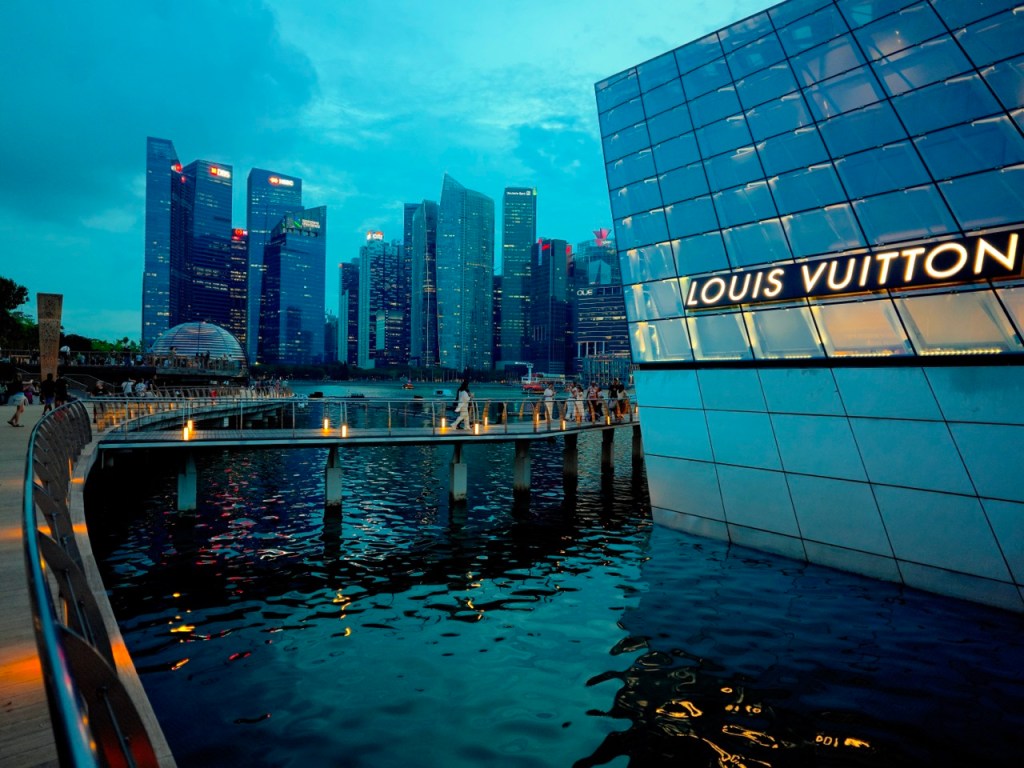
Marina Bay Sands is the luxury theatre, where wallets enter trembling and sales assistants glide about as if trained by ballet schools.
Bugis is louder, younger, messier and faster. It has bargain energy, youth energy, tourist energy and “I only came to look” energy, which is of course the most dangerous energy of all.
Mustafa Centre is another beast entirely. It is not a shop. It is a retail planet. You enter for batteries and leave with luggage, spices, socks, perfume, stationery, kitchenware and a mild suspicion that time no longer works normally.
Heartland malls are the true daily machine. They are not always glamorous, but they are powerful. They carry groceries, clinics, enrichment centres, hair salons, banks, bakeries, tuition centres, phone shops, bubble tea, fast food and the small everyday errands that keep family life moving.
Then there are local boutiques, design shops, indie labels, second-hand stores, pop-ups, flea markets and online-first brands. These give Singapore shopping something more personal than global chain retail. They make the buying act feel less like “I bought a product” and more like “I found something with a story.”
So yes, Singapore shopping is cultural.
Not always loudly cultural.
Often quietly cultural.
It is culture hidden inside purchase decisions.
3. Singapore Shopping Is About Value, Not Just Price
Here is where most people get it wrong.
They think Singapore shopping is expensive.
This is both true and useless.
A handbag at Marina Bay Sands can cost enough to make your bank account lie down quietly and ask for help. A supermarket basket can feel heavier than it should. A cafe brunch can achieve the financial density of a small electronics purchase.
But Singapore shopping is not only expensive.
It is layered.
There is luxury.
There is premium.
There is mid-range.
There is discount.
There is heartland value.
There is warehouse value.
There is online value.
There is cashback value.
There is loyalty-points value.
There is “buy three because one day you will need it” value, which is how cupboards become archaeological sites.
The real Singapore shopping question is not:
“Is this cheap?”
The better question is:
“What value am I actually buying?”
Sometimes you buy price.
That means the cheapest usable item wins.
Sometimes you buy durability.
That means the item costs more upfront but lasts longer, which is annoying because your wallet suffers today while your future self gets to feel smug.
Sometimes you buy convenience.
That means paying slightly more because the shop is near your home, the delivery is fast, the return policy is clear, or you are simply too tired to cross the island to save $3.
Sometimes you buy trust.
That means paying a reputable shop because the product matters, the warranty matters, the seller matters, and you do not want your new charger to behave like a tiny electrical villain.
Sometimes you buy identity.
That is fashion, watches, shoes, bags, cosmetics, home design, gadgets, collectibles and anything people buy partly because it says something about who they are, or who they are trying very hard to become.
Sometimes you buy relief.
That is food delivery, retail therapy, a new notebook, a skincare item, a toy, a snack, a coffee, or a small purchase that makes the day feel less like a spreadsheet with humidity.
This is why Singapore shopping is really a value machine.
The price tag is only the visible part.
Underneath it sits a larger calculation:
Money spent
minus time saved
plus comfort gained
plus trust received
plus status signalled
plus usefulness
minus regret
minus clutter
minus scam risk
minus “why did I buy this?” three days later.
That is the real bill.
4. Singapore Shopping Is About Tourism and Showcase
Singapore also shops for the world.
Tourists do not come only to buy things, but shopping is part of the visitor route because Singapore is clean, compact, safe, connected, easy to navigate and extremely good at putting food, hotels, attractions and retail within one smooth corridor.
This matters.
A tourist can land at Changi, take transport into town, shop at Orchard, wander Bugis, visit Marina Bay, eat, pay digitally, claim tourist tax benefits if eligible, and fly out with a suitcase that appears to have expanded through dark magic.
For visitors, Singapore shopping offers several promises.
First, variety.
You can find luxury goods, electronics, cosmetics, fashion, local souvenirs, snacks, watches, lifestyle products, pharmacy goods, children’s items, design objects, sportswear and an astonishing number of water bottles.
Second, reliability.
Singapore’s retail environment generally feels organised. Shops are clear, malls are clean, receipts exist, payment systems work, and you are less likely to feel you have entered a negotiation arena where the floor price is determined by your facial expression.
Third, compactness.
In some countries, shopping requires a car, a map and possibly emotional support. In Singapore, entire retail ecosystems sit on MRT lines. You can cover multiple shopping personalities in a day: luxury, budget, local, tourist, food, gifts, groceries, electronics and random “I did not know I needed this but apparently I do” purchases.
Fourth, climate control.
Never underestimate this.
Singapore’s shopping machine is partly a response to tropical weather. The mall is not just where you buy. It is where the city pauses, cools down, regroups and continues functioning without melting into soup.
This is why tourist shopping and local shopping overlap. A mall can serve visitors, office workers, families, students, tourists, elderly residents and bored people on a Saturday afternoon all at once.
The same escalator carries everyone.
That is the genius of it.
And occasionally the chaos.
5. Singapore Shopping Is Now Digital, Which Means Faster and More Dangerous
Once upon a time, shopping required legs.
Now it requires thumbs.
This changed everything.
Singapore shopping now happens in malls, apps, marketplaces, livestreams, social media, messaging chats, brand websites, delivery platforms and group buys. The shop is no longer only a place. It is a screen. It follows you home. It sits beside your pillow. It ambushes you at 11.47pm with a flash sale and a countdown timer that behaves like a bomb in an action film.
Online shopping is powerful because it compresses effort.
No queue.
No travel.
No sweating.
No parking.
No carrying.
No awkward small talk.
No walking past a mirror and realising the mall lighting has personally attacked you.
But online shopping also removes friction too well.
That is the danger.
When buying becomes too easy, the payment pain disappears. The cart fills quietly. Vouchers appear. Free shipping thresholds whisper nonsense. “Only 2 left” appears on screen like a threat from a tiny retail gangster. Before long, the buyer is no longer deciding. The interface is deciding.
This is why Singapore shopping today must include scam awareness, platform awareness and payment discipline.
The old shopping risk was buying something ugly.
The new shopping risk is buying something fake, never receiving the item, sending money to the wrong seller, clicking a fake link, trusting a fake account, scanning a dangerous QR code, or believing a deal that has the moral character of a crocodile in sunglasses.
The buyer now needs a new skill.
Not just “Can I afford this?”
But:
Is the seller real?
Is the platform protected?
Is the payment method traceable?
Is the discount believable?
Is the return policy clear?
Is the warranty local?
Is this link legitimate?
Why is this stranger rushing me?
Why is this price absurdly low?
Why am I being asked to move the transaction off-platform?
Singapore shopping has become smarter.
So the shopper must become sharper.
The 5-Stack Singapore Shopping System
Here is the whole system in one table.
| Stack | What It Looks Like | What It Really Does | Main Risk |
|---|---|---|---|
| Convenience Stack | Malls, MRT links, supermarkets, food courts | Reduces time, heat and daily friction | Buying because it is too easy |
| Culture Stack | Orchard, Bugis, heartland malls, local shops | Shows identity, lifestyle and social habits | Confusing image with real value |
| Value Stack | Prices, discounts, loyalty points, GST, bundles | Turns money into utility, trust or status | Mistaking cheap for good |
| Digital Stack | Apps, marketplaces, livestreams, wallets | Compresses shopping into instant action | Scams, impulse buying, weak verification |
| Finance Stack | Budgets, payments, credit, BNPL, savings | Connects shopping to household money | Future income being spent too early |
This is why Singapore shopping deserves to be understood properly.
It is not a small topic.
It touches family budgets, national retail, tourism, urban planning, digital payments, consumer protection, scams, culture, and the psychology of wanting things.
A shopping basket is never just a basket.
It is a small report card of how a person handles desire, time, money, trust and pressure.
What Singaporeans Are Really Buying
Most people think shopping means buying products.
Wrong.
People are usually buying one of seven things.
1. They Are Buying Time
Ready meals. Delivery. Nearby stores. One-stop malls. Same-day delivery. Convenience stores. Pre-cut fruit. School supplies near tuition centres.
Time is the hidden currency.
A busy parent may pay more because saving 40 minutes is worth more than saving $4.
That is not foolish. That is a trade.
The problem begins when convenience becomes automatic and nobody checks the bill.
2. They Are Buying Certainty
A branded product, a proper receipt, a known retailer, a local warranty, a platform with buyer protection.
This is not glamour. This is risk control.
Certainty matters when the item is expensive, technical, health-related, safety-related, or difficult to return.
3. They Are Buying Belonging
Fashion, shoes, bags, beauty, collectibles, trending toys, gadgets, lifestyle items.
People do not only buy what they need. They buy what helps them enter a group, signal taste, join a trend, or avoid feeling left behind.
This is where shopping becomes social.
4. They Are Buying Reward
After work.
After exams.
After National Service book-out.
After payday.
After surviving a week that behaved like a badly managed circus.
A small purchase can feel like proof that effort produced something visible.
That is psychologically real.
But reward shopping becomes dangerous when every stress needs a receipt.
5. They Are Buying Hope
Courses, books, planners, gym gear, skincare, clothes, productivity tools, kitchen gadgets.
These are not just objects. They are future-self purchases.
The buyer is not buying the item. The buyer is buying the idea that life will improve after the item arrives.
Sometimes it works.
Often, the item sits in the corner quietly judging everyone.
6. They Are Buying Status
Luxury goods, watches, premium electronics, designer fashion, rare items.
Status shopping is not automatically bad. Humans have always used objects to signal identity, rank, achievement and taste.
The danger is when status eats the budget.
A good status purchase strengthens identity without damaging the financial base.
A bad one turns the buyer into a walking advertisement for poor planning.
7. They Are Buying Peace
Groceries stocked.
Children’s school shoes settled.
Household items replaced.
Medicine bought.
Birthday present ready.
Dinner solved.
This is the quiet side of shopping.
Not glamorous. Not Instagram-worthy. But essential.
A functioning household is built through hundreds of boring purchases done correctly.
That is not trivial.
That is civilisation in plastic bags.
How Singapore Shopping Breaks
Singapore shopping breaks when the buyer loses control of the route.
There are several ways this happens.
1. The Discount Trap
A discount is not savings if you did not need the item.
This is the ancient law of retail physics.
If a $100 item is marked down to $60, you did not save $40 if the item now lives unused in your cupboard for three years like a museum exhibit of bad judgement.
You spent $60.
The correct question is not:
“How much is the discount?”
The correct question is:
“Would I still buy this if it were not on sale?”
If the answer is no, the sale has not helped you. It has captured you.
2. The Bundle Trap
Buy two get one free.
Buy three for a better price.
Spend $80 for free delivery.
Add $12 more for a voucher.
This is how shopping carts become weightlifting equipment.
Bundles can be useful for items you already use regularly. Toilet paper, detergent, rice, toothpaste, canned goods, school supplies. Fine.
But bundles become silly when they make you buy volume without purpose.
A bargain that creates clutter is not a bargain.
It is a storage problem with branding.
3. The Convenience Trap
Singapore makes buying easy.
Very easy.
Too easy.
A shop is always nearby. Food is always available. Delivery is always possible. Payment is instant. The app remembers your card. The platform remembers your weakness.
Convenience is wonderful when it solves real problems.
It is dangerous when it removes thinking.
4. The Status Trap
This is the one nobody likes admitting.
Sometimes people buy because other people are watching.
Or because they imagine other people are watching.
Or because social media has created a tiny courtroom inside their head.
Status spending becomes dangerous when the object is bought for the audience rather than the user.
A strong purchase still makes sense when nobody sees it.
A weak purchase collapses when the audience disappears.
5. The Scam Trap
The modern scam does not always look ridiculous.
It can look professional.
It can look urgent.
It can look official.
It can look like a platform message.
It can look like a seller with reviews.
It can look like a delivery update.
It can look like a bank warning.
It can look like a fantastic deal.
This is why modern shopping needs verification.
Not paranoia.
Verification.
Never let urgency replace checking.
Never move off-platform because a seller asks nicely.
Never send personal banking details through a link.
Never believe a price just because you want it to be true.
Never assume a familiar logo means a familiar company.
Trust is part of the price.
If trust is missing, the item is more expensive than it looks.
How to Shop Well in Singapore
Shopping well is not about refusing to buy.
That is not wisdom. That is merely standing in a mall looking miserable.
Shopping well means buying with control.
Here is the simple method.
Step 1: Name the Purpose
Before buying, ask:
What job is this item doing?
Need?
Replacement?
Gift?
Reward?
Convenience?
Status?
Experiment?
Emergency?
Family use?
Long-term value?
If you cannot name the purpose, the purchase is already wobbling.
Step 2: Check the True Cost
The true cost is not only the price.
It includes delivery fees, warranty, maintenance, storage, accessories, subscriptions, repair costs, return difficulty, time spent comparing, and the chance you will regret it.
Some cheap items are expensive because they break quickly.
Some expensive items are cheap because they last ten years.
Step 3: Decide the Trust Level Needed
For low-risk items, price can lead.
For high-risk items, trust must lead.
A phone charger, appliance, supplement, baby product, skincare product, luxury item, electronic device, school laptop or medical-related item should not be bought from mystery sellers just because the price looks exciting.
Excitement is not a warranty.
Step 4: Compare by Category, Not Emotion
Do not compare a luxury item to a cheap item and pretend they are the same purchase.
Do not compare an online mystery product with a properly warrantied local product and act shocked that prices differ.
Compare like with like.
Same brand.
Same model.
Same warranty.
Same seller reliability.
Same return rules.
Same delivery timeline.
Only then does price comparison mean anything.
Step 5: Use the Waiting Rule
For non-urgent purchases, wait.
One day for small items.
Three days for medium items.
Thirty days for expensive items.
If you still want it after the waiting period, and it still fits your budget, fine.
If the desire vanishes, congratulations.
You have just made money by doing nothing.
Which is the best kind of exercise.
Step 6: Budget the Category
Do not only budget by item.
Budget by category.
Groceries.
Food.
Transport.
Children.
Clothes.
Beauty.
Electronics.
Gifts.
Subscriptions.
Household.
Treats.
Big purchases.
This matters because no single purchase may look dangerous, but the category may be quietly staging a coup.
Step 7: Keep a Regret List
This sounds strange, but it works.
Write down purchases you regret.
Not to feel guilty.
To detect patterns.
Maybe you regret late-night app purchases.
Maybe you regret sale items.
Maybe you regret cheap electronics.
Maybe you regret clothes bought for imaginary events.
Maybe you regret buying snacks when tired.
Maybe you regret buying toys because the child negotiated like a tiny lawyer.
The regret list is a shopping mirror.
It shows the route that keeps capturing you.
What Singapore Shopping Reveals About Singapore
Singapore shopping reveals a lot about the country.
It shows a society that values efficiency.
Everything is connected. MRT, mall, office, home, school, food, payment, delivery. The city is built to reduce friction.
It shows a society that values cleanliness and order.
Retail spaces are curated, maintained and predictable. This matters to locals and tourists.
It shows a society that values aspiration.
Luxury malls, premium brands, enrichment purchases, lifestyle upgrades and technology all reflect a population looking upward, forward and outward.
It shows a society that values practicality.
Heartland malls, supermarkets, pharmacies, discount stores and food courts carry the daily machinery of life.
It shows a society under pressure.
Shopping is also relief from work stress, school stress, parenting stress, social comparison and the cost of living.
It shows a society moving fast into digital life.
Apps, wallets, QR codes, online marketplaces, delivery platforms and livestream commerce are now part of the buying landscape.
And it shows a society that must protect trust.
Because the faster money moves, the faster mistakes move too.
This is the great Singapore shopping paradox:
The system is incredibly convenient.
Which means the buyer must become incredibly disciplined.
The FinanceOS View: Shopping Is Money Leaving the Future
For a finance website, this is the key.
Every purchase is a small time machine.
When you spend money today, you are moving future options into the present.
That is not automatically bad.
Buying groceries moves future hunger into present preparation.
Buying school supplies moves future learning into present readiness.
Buying good shoes moves future comfort into present cost.
Buying a reliable laptop moves future productivity into present investment.
But bad shopping does the opposite.
It steals from the future to decorate the present.
A weak purchase reduces future choice.
A strong purchase protects future function.
A foolish purchase creates future clutter.
A smart purchase creates future usefulness.
A scam destroys future trust.
A good budget keeps future options alive.
This is why shopping belongs inside financial literacy.
Not because people should stop enjoying life.
Because enjoyment without control becomes leakage.
And leakage, over time, becomes debt, stress and regret.
The goal is not to become cheap.
The goal is to become difficult to fool.
A Simple Singapore Shopping Rule
Use this rule:
Buy the item only when the value survives after the excitement fades.
That is it.
If the item is still useful after the sale ends, still affordable after the month’s budget is checked, still trustworthy after the seller is verified, still wanted after waiting, and still meaningful when nobody sees it, then the purchase is probably sound.
But if the item depends on urgency, pressure, vanity, boredom, fear, fake scarcity, unclear sellers or emotional exhaustion, then stop.
The product may be fine.
The route is not.
And in shopping, the route matters.
Reality Check
Established Reality
Singapore shopping is part of daily life, tourism, retail, digital commerce and household spending. It includes malls, heartland retail, luxury shopping, supermarkets, online platforms, payment systems, tourist purchases and consumer protection concerns.
Practical Interpretation
To understand Singapore shopping properly, we should not read it only as “people buying things.” We should read it as a value-routing system where money, time, trust, convenience, identity and future financial options are constantly exchanged.
Reader Warning
Shopping is not bad.
Bad shopping is bad.
The difference is control.
A good shopper is not someone who never buys. A good shopper is someone who knows what the purchase is doing, what it costs, what risk it carries, and whether it strengthens or weakens the future budget.
A Kaya Toast Thought
Singapore shopping is not just Orchard Road, Bugis Street, Marina Bay Sands, Mustafa Centre, heartland malls or online deals.
It is the way a compact, fast, humid, efficient, ambitious country buys comfort, solves errands, rewards effort, signals identity, serves tourists, moves money and tests judgement.
It is a national machine made of escalators, QR codes, receipts, discounts, food courts, delivery riders, loyalty points, handbags, groceries, phone chargers, snacks, GST, scams, status and air-conditioning.
And like every powerful machine, it works beautifully when the operator is awake.
So shop.
But do not sleepwalk into the checkout.
The mall is clever.
The app is cleverer.
Be cleverest.
The Basket Tells the Truth
The most honest object in Singapore shopping is not the receipt.
It is the basket.
The basket does not care about your self-image. It has no interest in your financial goals, your fitness plan, your minimalist lifestyle, your noble speech about “only buying what is necessary,” or the solemn promise you made last month to stop ordering nonsense online at midnight.
The basket simply sits there and records evidence.
One packet of chips.
Two bottles of shampoo because the second one was “cheaper.”
A phone cable because the old one is “dying,” although there are already four dying cables at home in a drawer that has become a retirement village for electronics.
A box of cereal.
A skincare product with science words on the label.
A kitchen sponge.
A snack “for the children,” even though the children are not here and everyone knows who is going to eat it.
And then, right at the top, one item that explains the whole human condition: something bought for no clear reason except that it looked nice under retail lighting.
This is why shopping is such a useful topic.
It exposes people.
Not in a cruel way. In a wonderfully inconvenient way.
You can say you are disciplined. The basket will say otherwise.
You can say you are practical. The basket will quietly produce a novelty mug.
You can say you are saving money. The basket will reveal three separate “good deals” that added up to the price of a proper dinner.
You can say you came to buy toothpaste.
The basket will show toothpaste, socks, biscuits, a chopping board, two face masks, a small plant, and an item nobody in the household can explain but everyone agrees might be useful someday.
Someday.
The national graveyard of unnecessary purchases.
The Singapore Shopper Is Not One Person
There is no single Singapore shopper.
There are species.
The Mission Shopper
This person enters the mall like a commando.
Target: detergent.
Route: basement supermarket.
Time allowed: seven minutes.
No browsing. No distraction. No emotional relationship with pastries. No eye contact with promotional staff holding samples.
In theory, this is the ideal shopper.
In reality, this person is rare, fragile, and usually destroyed by the sight of a “limited-time offer.”
The Comparison Shopper
This person cannot buy anything without performing a full parliamentary inquiry.
They compare prices across three apps, two malls, one Telegram group, a neighbour’s recommendation, a cousin’s warning, a review from 2021, and a stranger on the internet who may or may not be a bot.
They are not wrong.
But they are also not free.
At some point, the cost of comparing becomes part of the cost of buying.
If you spend three hours saving $2.40, you have not defeated capitalism. You have volunteered as unpaid labour for your own shopping decision.
The Emotional Shopper
This person shops because life has been rude.
Work was tiring. The train was crowded. The child forgot homework. The boss sent an email with the emotional temperature of a traffic summons. The weather behaved like a wet oven.
So they buy something.
Not because they need it.
Because the purchase creates a tiny pocket of control in a day that has otherwise driven straight through a pothole.
This is not stupid. It is human.
But it is expensive if repeated too often.
A coffee is fine.
A new pair of shoes every time life becomes irritating is not a coping strategy. It is a footwear-based financial leak.
The Deal Hunter
This person does not shop.
This person stalks prey.
Discount signs tremble when they approach. Flash sales fear them. Cashback systems are known to whisper their name at night.
They know every voucher code. Every card promotion. Every bank tie-up. Every platform sale. Every free shipping threshold. Every loyalty point expiry date.
Magnificent.
Also dangerous.
Because the Deal Hunter sometimes forgets that a good deal on a useless item is still a useless item, merely wearing a hat.
The Parent Shopper
This person is not shopping for one person.
They are shopping for a logistics empire.
School shoes. Lunchbox. Assessment book. Water bottle. Uniform. Socks. Birthday gift for classmate. Groceries. Vitamins. Printer paper. Tape. Glue. Snacks. Emergency bread. More snacks. A mysterious school project requiring cardboard at 9.30pm.
The Parent Shopper does not browse.
The Parent Shopper resolves crises before they become announcements on the family WhatsApp group.
This is the most underappreciated shopping role in Singapore.
It is not consumption.
It is household maintenance with receipts.
The Tourist Shopper
This person enters Singapore shopping with optimism and luggage capacity.
They see clean malls, clear signs, air-conditioning, reliable payment systems, famous brands, local snacks, souvenirs, electronics, cosmetics, and a city where retail is attached neatly to transport.
They think: “This is easy.”
And it is.
Too easy.
By the second day, the suitcase has become a structural engineering challenge.
By the third day, someone is sitting on it while another person attempts to close the zip with the optimism of a rescue team.
That, too, is Singapore shopping.
The Queue Is Part of the Product
In Singapore, a queue is not merely a line of people.
It is a signal flare.
A queue says: something here is either good, famous, discounted, new, limited, or has successfully terrified everyone into thinking they will miss out.
The queue has power.
People see a queue and immediately become detectives.
“What is this?”
“Is it nice?”
“Why so many people?”
“Should we join first and decide later?”
This is how civilisation becomes ridiculous.
A person may not know what is being sold, how much it costs, whether they need it, or whether they even like it. But the queue creates social proof. The queue says: other people have judged this worth standing for.
And in Singapore, standing in line is not a casual decision. It is an investment of life force.
So if people are queueing, the item must mean something.
Maybe it is good.
Maybe it is new.
Maybe it is viral.
Maybe it is just the first week and everyone has temporarily lost perspective.
The queue turns shopping into theatre.
The product is one thing.
The act of obtaining it becomes another.
This is especially true for limited drops, food launches, pop-up shops, collectibles, sneakers, toys, luxury goods and anything involving the phrase “while stocks last,” which is one of the most dangerous phrases ever placed in front of a tired population with mobile payment.
The phrase “while stocks last” does not describe inventory.
It attacks the nervous system.
The Mall Is a Machine for Delaying Exit
A good mall does not want you to leave.
It is not aggressive about this. It is polite. Clean. Bright. Scented.
But the machine is working.
The escalator does not always take you exactly where you want to go. It sends you past shops.
The supermarket is often in the basement, because once you go down there, you must pass food, snacks, bakeries, household goods, and possibly a promotional island stacked with items no rational person woke up intending to buy.
The cinema is on the upper floor, so you travel through retail layers.
The toilets are located just far enough away that you discover a store you were not looking for.
The carpark exit route sends you past payment machines, vending machines, and occasionally another shop just when your willpower has reached the texture of wet tissue.
This is not an accident.
Retail is route design.
A shopping centre is basically a very polite trap with lighting.
It guides movement.
It slows exit.
It creates encounter.
It puts temptation along the path.
It turns “I am passing through” into “since I’m here.”
And “since I’m here” is one of the great budget-destroying sentences.
No one plans disaster with “since I’m here.”
But many small leaks begin there.
Since I’m here, I’ll get coffee.
Since I’m here, I’ll check the sale.
Since I’m here, I’ll buy the thing.
Since I’m here, I’ll look at shoes.
Since I’m here, I’ll just go into the shop for five minutes.
Five minutes later, you are holding a bag and claiming it was “quite worth it,” which is the traditional phrase used when the brain is still negotiating with the conscience.
The App Is Worse Because There Is No Door
At least a mall has a door.
You can leave.
You can physically remove yourself from danger.
You can walk out, breathe real air, see daylight, recover your identity, and remember that you came to buy batteries.
The app has no door.
The app lives with you.
It sits in your phone, beside your bank account, beside your messages, beside your photos, beside your food delivery, beside your alarm clock.
It is there when you wake up.
It is there when you are bored.
It is there when you are tired.
It is there when your willpower has gone to bed but your thumb is still awake.
The app is not a shop.
The app is a shopping engine attached to your nervous system.
It knows your browsing.
It remembers your cart.
It offers vouchers.
It creates countdowns.
It tells you people are buying.
It tells you stock is low.
It tells you free shipping is close.
It tells you the sale ends tonight.
Of course it ends tonight. Everything ends tonight. Apparently the entire retail universe is moments from collapse unless you buy a humidifier shaped like a penguin.
This is the digital version of retail pressure.
The old shop had a salesperson.
The new shop has an algorithm.
And the algorithm does not get tired.
It does not need lunch.
It does not feel shame.
It will recommend the same product until you either buy it, block it, or begin to question whether you have always secretly wanted it.
This is why online shopping control is harder than mall shopping control.
The mall tempts you during a visit.
The app tempts you during your life.
The Payment Moment Has Become Too Smooth
Once, payment had friction.
You opened your wallet. You counted cash. You saw the notes leaving. There was a small funeral.
Then cards arrived.
Then contactless.
Then wallets.
Then one-click payment.
Then buy-now-pay-later.
Then saved cards.
Then auto-fill.
Then in-app checkout so smooth it feels less like spending money and more like approving a screen transition.
This is wonderful for efficiency.
It is terrible for awareness.
The easier payment becomes, the less the brain feels the loss.
Cash creates pain.
Cards reduce pain.
Digital wallets blur pain.
Instalments postpone pain.
Rewards disguise pain.
Cashback perfumes pain and sends it back wearing sunglasses.
The shopper thinks: “I got points.”
Yes.
You also spent money.
Points are not a refund from heaven. They are a tiny biscuit given to you by the machine after you fed it a larger biscuit.
This is where financial literacy becomes essential.
A payment method is not neutral. It changes behaviour.
If a payment system makes you spend more than you intended, then the convenience is not free. It is charging you through behaviour.
The most dangerous shopping sentence is not “I want this.”
It is:
“It’s only…”
It’s only $9.90.
It’s only $14.80.
It’s only $29.90.
It’s only three payments.
It’s only a small treat.
It’s only for today.
It’s only because I had a hard week.
This is how money leaks: not through one giant hole, but through many tiny polite openings, each one smiling like it did nothing wrong.
The Household Is the Real Checkout Counter
A purchase is not finished when payment succeeds.
That is only when the shop is finished with you.
The household must still absorb the item.
Where does it go?
Who uses it?
Who maintains it?
Who cleans it?
Who stores it?
Who remembers the warranty?
Who returns it if defective?
Who throws it away when it fails?
Who feels guilty because it was expensive and now nobody uses it?
This is the part retail does not show in the advertisement.
The advertisement shows the item glowing in a perfect home with absurdly clean surfaces.
Reality shows the item sitting beside three older versions of itself, tangled in cables, half-covered by a plastic bag, while someone says, “Don’t throw, can still use.”
Singapore homes are not infinite.
Storage is a battlefield.
Every purchase must occupy physical space, mental space or financial space.
A cheap item that clutters the home is not cheap. It charges rent in attention.
An unused appliance is not silent. It radiates judgement.
A pile of “maybe useful” items is not preparation. It is domestic sediment.
This is why good shopping must include the afterlife of the product.
Not just “Should I buy it?”
But:
Where will it live?
Will I actually use it?
What does it replace?
What leaves the house when this enters?
If nothing leaves, then the home becomes a warehouse with beds.
And once a home becomes a warehouse, every drawer becomes an argument.
Why Singapore Shopping Feels So Fast
Singapore shopping feels fast because the country is compressed.
Population, transport, work, school, retail, food, finance and digital systems sit close together.
This compression creates speed.
You can compare prices quickly.
Move between malls quickly.
Pay quickly.
Receive deliveries quickly.
Switch brands quickly.
Join trends quickly.
Abandon trends quickly.
Complain quickly.
Review quickly.
Refund quickly, sometimes.
Regret quickly, often.
Speed is useful.
But speed also reduces reflection.
A slower shopping environment gives desire time to cool. Singapore does not always do that. It lets desire meet availability almost instantly.
Hungry? Food is nearby.
Bored? Mall nearby.
Need something? App nearby.
Want something? Delivery nearby.
Regret something? Too late, it is already on the way.
This creates a new shopping problem: the buyer’s decision speed must match the system’s transaction speed.
If the system is fast and the buyer is slow-thinking, the system wins.
Every time.
The modern Singapore shopper needs internal brakes.
Not because shopping is evil.
Because the machine is very good.
Too good.
It is clean, smooth, efficient, persuasive, networked, air-conditioned and available on your phone while you are lying in bed pretending you are “just looking.”
Nobody is just looking.
“Just looking” is the first chapter of a receipt.
The Real Skill Is Not Saving Money
People often think the goal of shopping education is to save money.
That is only partly true.
Saving money is good, obviously. Money saved can become emergency funds, investment, education, family security, travel, healthcare, retirement, opportunity and sleep.
But the deeper skill is not saving.
It is routing.
A strong shopper routes money toward what strengthens life.
A weak shopper routes money toward what temporarily quiets discomfort.
That is the difference.
Two people can spend the same $200 and produce completely different futures.
One buys groceries, school supplies, a reliable work tool and a planned gift.
The other buys random deals, a trendy object, delivery because of poor planning, and something bought while annoyed.
Same money.
Different route.
Shopping is not only about amount.
It is about direction.
Where did the money go?
Did it strengthen health, learning, work, family, time, safety, joy, durability or long-term usefulness?
Or did it vanish into clutter, impulse, status anxiety, fake urgency and platform tricks?
That is the finance question.
Not “Did you spend?”
But “What did the spending build?”
The Singapore Shopping Control Tower
A good shopper needs a simple control tower.
Not a 47-tab spreadsheet with colour coding and a personal finance system so complicated it requires national service training.
Just a control panel.
Before buying, run five checks.
Check 1: Need
What problem does this solve?
If it solves no problem, it is not automatically wrong. But now you must admit it is a want, a reward, a status item or an experiment.
That honesty matters.
A want can be valid.
A disguised want pretending to be a need is where trouble begins.
Check 2: Timing
Must this be bought now?
Some purchases are urgent.
Medicine. School materials. Replacement work device. Household essentials. Safety items.
Many purchases only pretend to be urgent because the sale timer is shouting.
A timer is not your boss.
Unless your fridge has died, your child needs shoes tomorrow, or your phone charger is producing sparks like a tiny dragon, most things can wait.
Check 3: Trust
Who is selling this?
For low-risk products, fine, experiment.
For high-risk products, do not be heroic.
If it goes into your body, touches your child, connects to electricity, stores your data, costs a lot, claims health benefits, or requires warranty support, trust is not optional.
Trust is part of the product.
Check 4: Budget
Which category pays for this?
If the answer is “future me,” then future you should be allowed to object.
Do not make future you the silent sponsor of present nonsense.
Future you has bills.
Future you is tired.
Future you would like to know why present you bought a decorative lamp shaped like a mushroom.
Check 5: Exit
What happens if I do not buy this?
This is the most powerful question.
If the answer is “nothing much,” then you have discovered the truth.
If not buying causes no real damage, the item is optional.
Optional items can still be bought.
But they must behave like guests, not invaders.
They must fit the budget, fit the home, fit the purpose and leave no wreckage behind.
Singapore Shopping Is a Test of Modern Discipline
The older world tested discipline through scarcity.
You could not buy because things were not available, shops were far away, information was limited, or money had to be physically handed over.
The modern world tests discipline through abundance.
Everything is available.
Everything is reviewed.
Everything is discounted.
Everything can be delivered.
Everything can be paid for.
Everything can be justified.
Everything has a nicer version.
Everything has a cheaper version.
Everything has a limited version.
Everything has a premium version.
Everything has a person online telling you it changed their life.
This is much harder.
Scarcity says no for you.
Abundance requires you to say no for yourself.
That is the modern shopping skill.
Not finding products.
There are products everywhere.
The skill is refusing the wrong ones.
The skill is choosing without being dragged.
The skill is seeing through the lighting, the discount, the queue, the app notification, the influencer, the bundle, the timer, the loyalty points, the free gift, the artificial urgency, the social pressure, and the tiny internal voice saying, “Just buy lah, you deserve it.”
Maybe you do deserve it.
But do you deserve the bill?
That is the question.
The Shopper’s Real Victory
A good shopping day is not the day you buy the most.
It is not the day you get the biggest discount.
It is not the day you return home with six bags and a heroic story about savings.
A good shopping day is the day every purchase has a job.
The groceries feed people.
The shoes replace worn shoes.
The gift fits the person.
The household item solves a real problem.
The treat brings joy without damaging the budget.
The big purchase was planned.
The risky purchase was avoided.
The scam link was ignored.
The app cart was abandoned because the desire evaporated under adult supervision.
That is victory.
Quiet, boring, magnificent victory.
No fireworks. No applause. No dramatic music.
Just a household that still has money, space, food, working items, fewer regrets and slightly less chaos.
In Singapore, that is not a small achievement.
That is elite-level shopping.
Because the machine is fast.
The machine is clever.
The machine is everywhere.
And the shopper, poor thing, is expected to remain sane while being offered vouchers, rewards, bundles, queues, limited editions, free gifts, livestream deals, mall promotions, bank tie-ups, festival sales, birthday discounts, platform coins and a free tote bag with minimum spend.
The free tote bag.
The final insult.
A bag given to you because you bought too many things, so that you can carry the evidence more comfortably.
Brilliant.
Absolutely brilliant.
Roundup: What Singapore Shopping Is Really About
Singapore shopping is not a gentle activity.
It pretends to be gentle.
It presents itself as a clean mall, a nice escalator, a bright supermarket, a cheerful promotion banner, a polite cashier, a small app notification, and a harmless little “add to cart” button.
But underneath, it is a full-contact sport conducted in tropical humidity.
You begin with a simple plan.
“I just need to buy one thing.”
This is always the first lie.
No Singaporean enters a mall for “one thing” and leaves with one thing unless they are either highly trained, deeply traumatised by past receipts, or late for something more frightening than shopping.
The rest of us enter the machine.
And the machine is ready.
Outside, Singapore is hot enough to make your thoughts perspire. The air is thick. The pavement glows. Your T-shirt is already negotiating surrender. Nobody sensible is dressing like they are going to a Milan fashion show just to buy groceries, bubble tea and a phone cable.
This is Singapore.
T-shirt.
Shorts.
Flip flops.
Crocs.
Maybe a tote bag.
Maybe hair clipped up because the weather has declared war.
Maybe no makeup because the humidity will eat it anyway.
The entire point is survival with purchasing ability.
And then the automatic doors open.
Cold air.
Bright lights.
Shops everywhere.
Food smells.
Promotions.
Escalators.
Children asking for things.
Adults pretending not to want things.
Tourists wandering heroically with shopping bags.
Teenagers orbiting bubble tea outlets.
Parents carrying logistics problems in human form.
Office workers walking with the hollow expression of people who came for dinner and will probably leave with socks.
This is not just shopping.
This is Singapore’s air-conditioned national theatre.
Shopping Till You Drop, Singapore Edition
“Shopping till you drop” in Singapore does not mean strolling beautifully down a grand boulevard in designer clothes.
No.
That is the brochure version.
The real version is someone in slippers walking through five malls connected by underground passageways, carrying Watsons, Uniqlo, Don Don Donki, supermarket bags, a random bakery box, and one mysterious purchase from a shop they cannot remember entering.
It is the auntie who knows exactly when the promotion changes.
It is the uncle guarding the trolley like it contains state secrets.
It is the parent calculating whether the child really needs new shoes or merely wants shoes that light up like a nightclub.
It is the teenager buying one drink and occupying a table with the confidence of a property developer.
It is the tourist trying to understand why every mall leads to another mall, and why the basement has become an entire civilisation.
It is the working adult who said, “I’m just going to walk around,” and somehow bought dinner, skincare, a charger, groceries, and emotional damage.
Singapore shopping is exhausting because it is too easy.
Everything is close.
Everything is connected.
Everything is bright.
Everything is “on offer.”
Everything is “last day.”
Everything is “member price.”
Everything is “while stocks last.”
Everything is “spend $20 more.”
You walk in as a person.
You leave as a delivery system for plastic bags.
The Heat Outside Makes the Mall More Powerful
The weather is not a background detail.
The weather is part of the shopping engine.
In a cool country, you may think carefully before entering a shop.
In Singapore, the mall is refuge.
You do not always enter because you want to buy.
You enter because outside is behaving like soup.
The mall says: come in, cool down, have a drink, look around.
Very reasonable.
Then it quietly attacks your wallet.
This is why Singapore shopping is so efficient. The city does not need to force people into retail spaces. The weather helps.
You are hot.
The mall is cold.
You are tired.
The mall has seats.
You are hungry.
The mall has food.
You need a toilet.
The mall has one, but naturally it is located somewhere that requires you to pass six shops, two snack counters and a display of discounted household goods.
By the time you reach the toilet, you have somehow considered buying a luggage scale.
Why?
Nobody knows.
But it was there.
And it was 20% off.
This is how it begins.
Nobody Needs to Dress Up to Shop Here
This is one of the most beautiful things about Singapore shopping.
You can shop at a luxury mall in shorts.
You can buy groceries in slippers.
You can walk into a branded store dressed like you are on the way to throw rubbish.
You can eat ramen, buy detergent, browse watches, collect a parcel, drink kopi, and look at a $6,000 handbag in the same afternoon while wearing Crocs.
This is not laziness.
This is environmental intelligence.
Singapore is too hot for unnecessary fashion suffering.
The practical uniform wins.
T-shirt, shorts, flip flops.
Done.
The body survives.
The wallet is still in danger, but at least the body survives.
There is something wonderfully democratic about it. The shopping machine may have luxury zones, budget zones, tourist zones, heartland zones and online zones, but the Singapore shopper moves through all of them in practical footwear.
Because in the end, the true luxury is not a watch.
It is ventilation.
The Madness Is Not Random
The madness of Singapore shopping has structure.
It is not just people buying things wildly.
It is a system.
The heat pushes people indoors.
The MRT pushes people through malls.
The malls attach themselves to daily routes.
The shops attach themselves to meals, errands and waiting time.
The apps attach themselves to boredom.
The promotions attach themselves to fear of missing out.
The payment systems remove friction.
The delivery systems remove effort.
The loyalty points make spending feel clever.
The bundles make overbuying feel responsible.
The tote bag appears at the end like a medal for financial confusion.
And suddenly, shopping becomes part of life’s rhythm.
After lunch, browse.
Before dinner, buy.
After work, decompress.
During school holidays, occupy the children.
During sales, prepare for combat.
Before Chinese New Year, buy everything.
Before Christmas, buy everything again.
Before a birthday, panic-buy.
Before exams, buy stationery as if pens alone can rescue the education system.
This is Singapore shopping.
Not occasional.
Continuous.
Not just consumption.
Circulation.
Money, people, goods, food, habits, status, convenience and stress all moving through the same system.
The Real Meaning of Singapore Shopping
So what is Singapore shopping about?
It is about convenience.
It is about staying cool.
It is about food, errands, family, tourism, transport and time.
It is about buying necessities while accidentally buying snacks.
It is about ordinary people in ordinary clothes moving through an extraordinary retail machine.
It is about the heartland mall that keeps the household running.
It is about Orchard Road performing glamour.
It is about Marina Bay performing luxury.
It is about Bugis performing youth and bargain energy.
It is about Mustafa performing retail as an endurance event.
It is about online platforms performing temptation at 1am.
It is about the small thrill of a good deal and the large regret of buying rubbish.
It is about Singapore’s strange genius for turning every journey into a possible purchase route.
But most of all, Singapore shopping is about the battle between the shopper and the machine.
The machine says:
Come in. Cool down. Look only. Buy later. Actually buy now. Add one more. Use voucher. Free delivery. Member price. Last day. Limited stock. Spend more. Reward yourself.
The shopper says:
I only came for toothpaste.
The machine smiles.
Two hours later, the shopper leaves with toothpaste, socks, bread, bubble tea, shampoo, a frying pan, three discounted snacks, a birthday card, and a free tote bag that will now join the other seventeen free tote bags at home.
This is Singapore shopping.
Hot outside.
Freezing inside.
No need to dress up.
Just slippers, shorts, Crocs, and the dangerous confidence of someone who thinks they are only browsing.
And that is exactly how the mall gets you.
Conclusion: So, What Is Singapore Shopping Really About?
So what is Singapore shopping about?
It is about surviving the weather, first of all.
Let us not pretend otherwise.
In Singapore, the mall is not merely a retail destination. It is a cooling chamber, food station, toilet rescue point, family logistics hub, waiting room, walking track, date venue, tourist attraction, and financial trap with escalators.
Outside, the humidity is doing push-ups on your face.
Inside, the air-con is glorious.
So in you go.
T-shirt, shorts, slippers, Crocs, no problem.
Nobody cares.
This is not Paris Fashion Week. This is Tampines, Orchard, Bugis, Jurong, Punggol, VivoCity, Marina Bay, Mustafa, Don Don Donki, FairPrice, Watsons, Guardian, Uniqlo, and one random shop selling things you never knew existed until five seconds ago.
Singapore shopping is about convenience so extreme it becomes dangerous.
The MRT brings you to the mall.
The mall brings you to food.
The food brings you to drinks.
The drinks bring you past a promotion.
The promotion brings you into a shop.
The shop brings you to a basket.
The basket brings you to a cashier.
The cashier brings you to a receipt.
The receipt brings you to regret.
Then you say, “Actually quite worth it lah.”
This is the national coping mechanism.
But beneath the humour, there is a serious point.
Shopping is not just spending. It is routing money.
Good shopping turns money into food, comfort, usefulness, time saved, family stability, better tools, proper gifts, and a smoother life.
Bad shopping turns money into clutter, regret, storage problems, fake savings, scam risk, and future-you asking why present-you behaved like that.
That is why Singapore shopping must be understood properly.
It is not only Orchard Road glamour.
It is not only Marina Bay luxury.
It is not only Bugis bargains.
It is not only heartland malls.
It is not only online flash sales at midnight when your brain has gone home but your thumb is still shopping.
It is all of them together.
A national shopping machine running on heat, air-conditioning, food, transport, convenience, payments, discounts, apps, family needs, tourism, and human weakness.
And that is the whole thing.
Singapore shopping is mad because Singapore is efficient.
Everything is nearby.
Everything is connected.
Everything is bright.
Everything is on offer.
Everything can be paid for instantly.
Everything can be delivered.
Everything says, “Just buy only.”
But the clever shopper knows better.
Buy what has a job.
Buy what fits the budget.
Buy what survives after the excitement fades.
Buy what strengthens the household instead of filling the storeroom with plastic evidence.
Because in the end, shopping in Singapore is not about looking atas.
You can do the whole thing in shorts and Crocs.
It is about staying cool, moving fast, buying smart, and not letting a “limited-time promotion” bully you into carrying home a frying pan, three snacks, a water bottle, and yet another free tote bag.
The mall is clever.
The app is worse.
So the shopper must be cleverer.
Almost-Code: Singapore Shopping Runtime
INPUT: buyer_has_need_or_desire item_available_in_store_or_online payment_possible seller_trust_level_known_or_unknownSHOPPING_SYSTEM: detect_context: location = mall / heartland / online / tourist_precinct / luxury_zone purpose = need / convenience / reward / status / gift / emergency / experiment urgency = real / manufactured / emotional evaluate_value: price_check usefulness_check durability_check warranty_check trust_check return_policy_check budget_check future_cost_check detect_risk: impulse_discount bundle_overbuying unclear_seller off-platform_payment fake_urgency no_warranty scam_signal status_pressure decision_gate: IF purpose_clear AND budget_safe AND seller_trusted AND value_survives_after_waiting THEN purchase_valid ELSE delay / compare / verify / rejectOUTPUT: good_purchase = future_usefulness + present_need_solved + budget_preserved bad_purchase = regret + clutter + money_leakage + reduced_future_options scam_purchase = trust_failure + financial_loss + repair_needed


Leave a Reply